‘Good things come to those who…’ : 5 ways to live life to the full

My eldest daughter has inherited one of my biggest personal struggles in life: waiting.

Once she gets something in her head she cannot rest until she has acquired or accomplished it.

I am exactly the same; waiting to me has always felt like an utter waste of time- unproductive minutes forever lost in a vacuum of nothingness.

It used to drive me crazy when my parents would say, ‘Patience, patience.’

And yet, I’ve found myself saying to Zoë all too often- ‘Be patient, honey. Good things come to those who…’

1. …Wait

‘Instead of demanding the toy from your sister there and then, it might be an idea to ask once, then wait. She’s much more likely to give it to you than if you try to snatch it off her. Good things come to those who wait.’

‘Instead of asking me over and over for the sweet, it might be an idea to wait quietly without pestering me. Then I might be more inclined to give you two rather than one! Good things come to those who wait.’

If we are willing to wait around for a while, we will soon find life has lots of good things stored up for us. Waiting without demanding what we want is no easy task. But it often pays dividends- whether it be with a promotion, an investment return, or the provision of a need that we were were willing to hold off a little bit longer from splashing out on.

And if we are in a season when things are really tough; the principle remains. Wait long enough, and winter will end. Wait long enough, and you’ll see the shoots of spring coming through.

Wait, and the good will come.

2. …Give

We’ve all heard the saying, ‘It is more blessed to give than to receive, but do we actually believe it? Well we should, because it’s true!

There is nothing better than watching someone light up when you give them a gift from the heart – whether it be your time, your money, your talents or your words.

Why?

Because the best things in life are shared. Because the hearts that give without expecting anything in return are the most richly blessed.

As Jesus teaches us- ‘give, and it will be given to you. Good measure, pressed down, shaken together, running over, will be put into your lap. For with the measure you use it will be measured back to you” (Luke 6:38).

The measure we use will be returned to us. If you are giving with expectations, you’re robbing yourself of the blessing of real giving. Too often we give expecting the person to behave a certain way as a result of what we’ve given. That’s not a gift, it’s a loan or a contract.

How can you genuinely give with no strings attached?

🌱Love without condition.

🌱Talk without bad intention.

🌱Give without reason.

🌱Care without expectation.

How can you show true generosity today?
3. …Receive

All this being said, it’s not only important to learn how to give well, we need to be willing to receive the good, too.

Learn to let others bless you. To acknowledge you need their generosity, love, time and care.

Because too often, we let pride prevent good from entering our lives. Some of us won’t accept second hand offerings. Others don’t want anyone to think they are in need, so they either refuse gifts or try to pay them back.

Someone once told me, ‘make sure you are easy to give to.’ This applies to finances, compliments, hospitality – you name it. Be easy to give to. It sounds Irish, but the easier you are to give to, the more you will be given to!

Do you silently squirm inside when someone offers you love, care or encouragement? Do you find good things hard to receive from others? Or can you receive openly and with deep joy? If you’re awkward every time someone tries to compliment you, they’ll be put off doing so again. Make it easy for them!

Practice allowing yourself to surrender to the good feeling of receiving a gift! And in so doing grant the giver the great joy of seeing your delight in accepting their generosity wholeheartedly.
4. …Forgive!

This is one of the most important lessons I’ve learned and am always learning.

🌱Life is too short to hold grudges.

🌱Life is to short to keep record of wrongs.

🌱Life is too short to constantly expect too much of people.

Good things come to those who can let things go and move on. To those who can extend grace and realise that the majority of people are doing their best and haven’t deliberately offended or disappointed us.To those who do the hard work of processing deep pain so they can be free from it.

Forgiveness is one of the greatest gifts you’ll ever give yourself. When you practice releasing hurt and choosing to have an attitude of grace and kindness towards others, you’ll be able to be kinder to yourself as well (notwithstanding the fact that you’ll be less angry, sleep better, have less physical pain, better heart function and increased life satisfaction… I could go on and on about this one!)

So good things come to those who…

…Wait

…Give

…Receive

…forgive!

What words could you add to this list? I’m sure there’s many more I’ve missed.

H x
The emotional rollercoaster of COVID-19: 5 ways to cope with the flatness, the curve balls and everything in between

One day, I wake up feeling fine. The sun is shining, the mood is good, the kids are pleasant.

The next day is grey from the start. It’s pouring with rain outside, tempers are frayed, and patience is thin.

The past few months have brought a perpetual series of ups and downs for us all. But when you continually experience such extremes, it leaves you feeling as if you don’t know whether you’re coming or going, doesn’t it?

In Northern Ireland we know all too well what it is like to experience every season of weather in one day. But now we know what it’s like to feel every emotion going in 24 hours as well! – From anxiety about the safety of our loved ones, to feeling isolated from friends, to frustrations with people who aren’t following guidelines, to joy when we get a thoughtful letter in the post, to comfort when we chat with grandparents over FaceTime.

Here’s how I’ve been learning to cope with my own pendulum swings this past year:

1. Be thankful for the great days

We have made some beautiful memories since the pandemic began. From planting shrubs, to collecting shells, to picnic lunches in the garden, to leisurely family walks around our neighbourhood. Nothing can snatch those memories away. In moments of frustration, I savour on them like I would my last piece of chocolate. Gratitude is a great source of joy!

2. Acknowledge the bad days

It keeps our feet on the ground to acknowledge our human flaws and frailties. We’ve cried our tears. We’ve had our disagreements. We’ve felt the stress of cancelled holidays, uncertainties about work and church, and navigating different boundaries and expectations. But as one good friend advised, ‘it’s only when you allow yourself to feel the feelings that you can move on from them.’

3. Take note of the ‘blah’ days

You know what I mean by a blah day? Days when you’re so drained you don’t know what to be at, who to call, what household job to start with, what work task to attempt. Days when you feel like a toy that is running out of batteries and whose music is going flat. It’s normal to have blah days once in a while, but take note if they are becoming more and more frequent. No one can live in a constant state of overwhelm. You may need to reach out for more outside support.

4. Grow in the scary days

These are days when the gravity of the situation hits you. When you hear of a friend getting sick. When you know of someone who has died. When your little people run a fever. These days break your heart and test your resilience. But they also have the potential to develop faith and perseverance in you. Don’t discount them as write offs or try to avoid them at all costs. Walk through them knowing that they will pass, that they will form character in you, and that hope is never out of the picture.

5. Learn from each and every day

If there’s one thing I’ve learned in all this it’s that extremes are completely normal- so many people are feeling the same way! So please don’t feel you are odd if you’re laughing one minute and crying the next.

This time has included every conceivable emotion, from grief, fear and anxiety to elation, inspiration and hope.

We’ve witnessed people at their worst- looting shelves, violent behaviour on the streets, and committing racial injustice.

But we’ve also seen kindness, generosity, sacrifice and neighbourliness like never before.

We’ve seen people deep in despair, but we’ve also witnessed the brightest hope shining through at every juncture.

Days come in every variety, just like people. So-

1. Be thankful for the good days

2. Acknowledge the bad days

3. Take note of the ‘blah’ days

4. Grow in the scary days

5. Learn from each and every day

… and we’ll all get through this together!

H xx

Find your voice and discover true greatness

I’ve always loved to sing. It’s more than just a hobby for me. It’s therapeutic. It’s creative. It’s meaningful. When words are paired with music, the truth of them comes alive for me.

I’ll never forget doing my first solo; I was six years of age, standing in front of a packed Sunday morning congregation. I still remember the lump in my throat and my knobbly knees knocking together, as my mum thrust me forward towards a podium that was twice the height of me. A crowd of two hundred people feels like the equivalent of a football stadium at that age. It takes courage to put such a little voice out there!

Another vivid memory comes from my twenties, when I sang a piece at a women’s conference during a Bible college placement in Ghana. The accompaniment was played on an ancient Casio keyboard and there were no microphones to be found.

I struggled my way through as sincerely as I could. Afterwards an old African woman hobbled up to me and complained that my voice was too ‘soft’ and ‘sweet.’ She suggested I get some of the African women to teach me how to sing.

I didn’t really know how to respond to that one! She wanted a bit more volume and oomph. She thought the passion wasn’t there because the performance wasn’t loud. She mistook softness for a lack of spirit.

In Northern Ireland, when you can hold a tune, people often say, ‘Och, so and so has a good wee voice.’ And in the same way, sometimes we think of our voices as just that- ‘Och, just a good wee voice.’

But boy is that an underestimation.

The beliefs and attitudes expressed when we open our mouths are more powerful than we will ever appreciate.

On the stage of life volume doesn’t necessarily equal power. Loudness isn’t not the equivalent of strength. The most important question is not, ‘Are people being impressed by what they hear?’ But rather, ‘Are they being touched, moved and impacted for the better by what they hear?’

So often we think, ‘I’m just ordinary. There’s not much mileage in the conversations I’ll have. I’ve got limited ability to influence others.’

But we all have a voice.

A unique voice that echoes around the chambers of our minds. A voice that ricochets around the corridors of our interactions with others. A message we can proclaim from the rooftops of our communities.

And we can always use it for greatness!

🌱When your mind is full of pessimistic assumptions, you can drown out negativity with the voice of hope.

🌱When things are uncomfortably quiet, between you and another person, you can use your voice to create new and meaningful connections.

🌱When you’re in a room full of people who are competing and jockeying for position, you can use your voice to inject cooperation and compromise into that environment.

🌱When you’re in an atmosphere of tension and offence, you can use your voice to infuse peace and harmony unto the air.

🌱When you see oppression and injustice, you can use your voice to challenge and bring change on behalf of the marginalised and downtrodden.

🌱When you see someone who is weary and burnt out, you can use your voice to affirm and encourage them to take another step.

🌱In situations where everyone feels confused and uncertain, you can use your voice to cut into the fog with clarity and composure.

🌱Where you see division and strife, you can use your voice to bring the balm of peace and healing.

Each one of us has a ‘wee’ voice that has the potential for ‘great’ impact.

How will you use yours today?

What your bedside table may reveal about you

Have you ever thought your bedside table might just be a window to your soul? What we keep on them can say a lot about us. They can also say a lot about the differences between us and our partners!

Some of us like a well stocked table. We don’t mind a bit of clutter. We are larger than life personalities who love to be surrounded by people and things. The world would be less warm without us!

Others like to keep things simple. For them, sleep is sacred and only objects that are conducive to that should be kept nearby. They are intentional, practical, organised and efficient! A lot in life would fall apart without them!

One or two of you break the mould altogether and have no bedside table at all. You are the independent forces for change in this world. Nothing would progress in society without you!

But do you know what bedside tables were originally used for?

Necessity

Your bedside table was where you would have hidden your chamber pot in the old days. No more explanation needed there 😂

Convenience

The Victorians called bedside tables ‘commode’ which comes from the French word for ‘convenient’. That’s still true right? Many people use a bedside table (or nightstand) to store everything you need to use last thing at night or first thing in the morning.

Importance

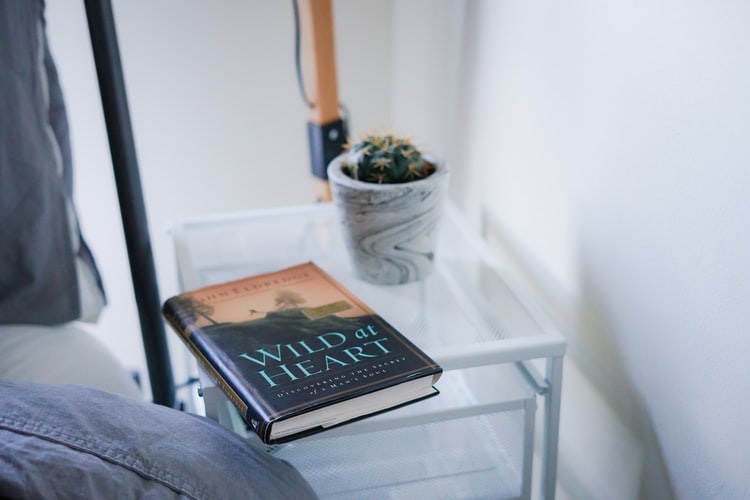
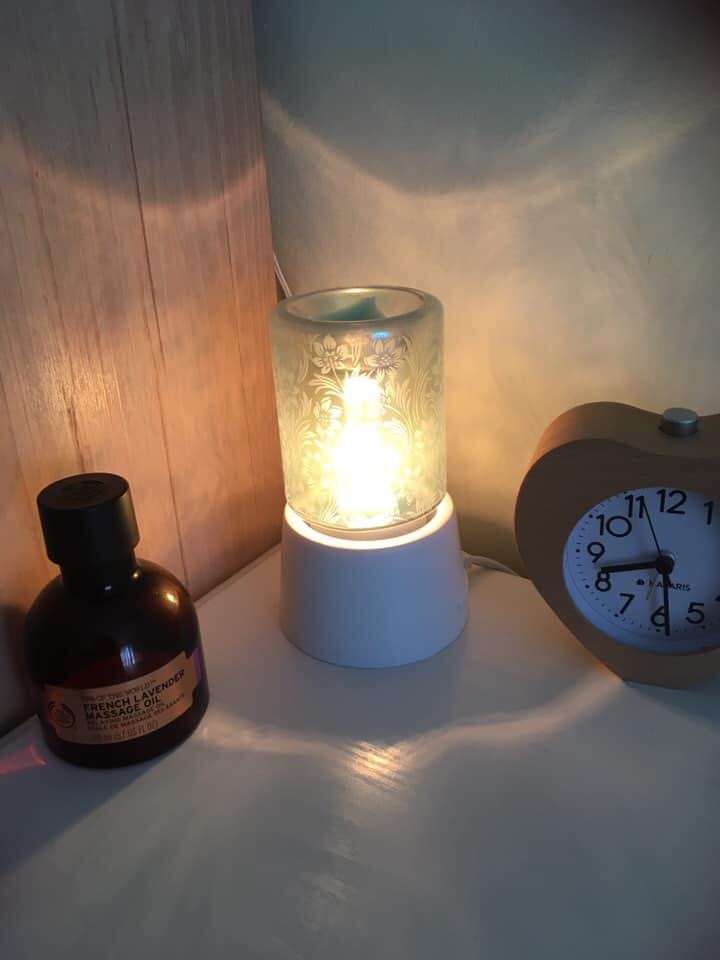
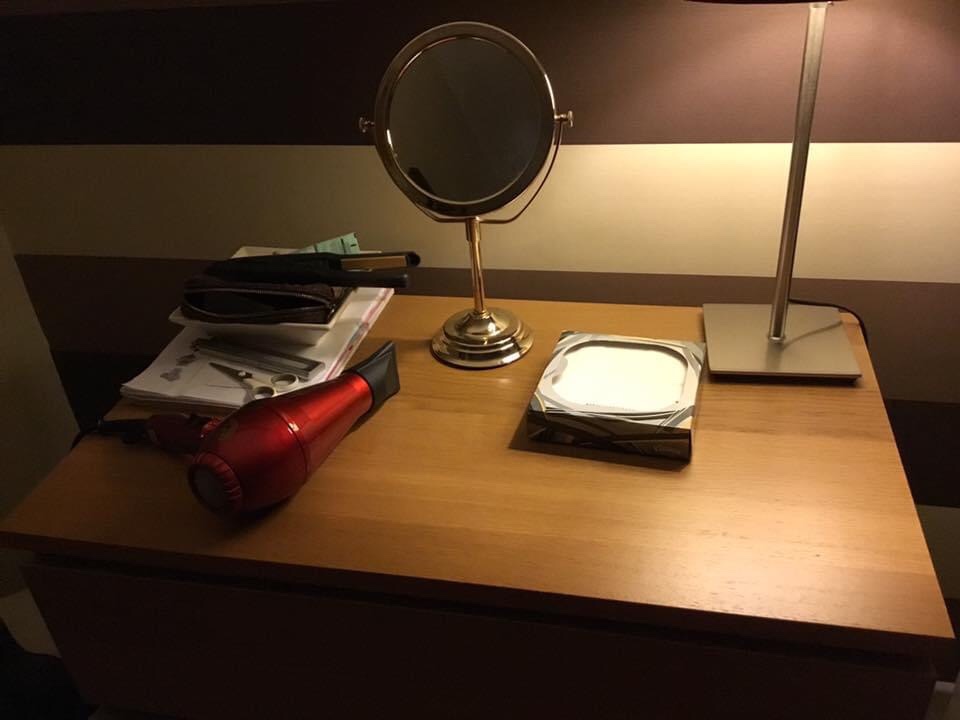
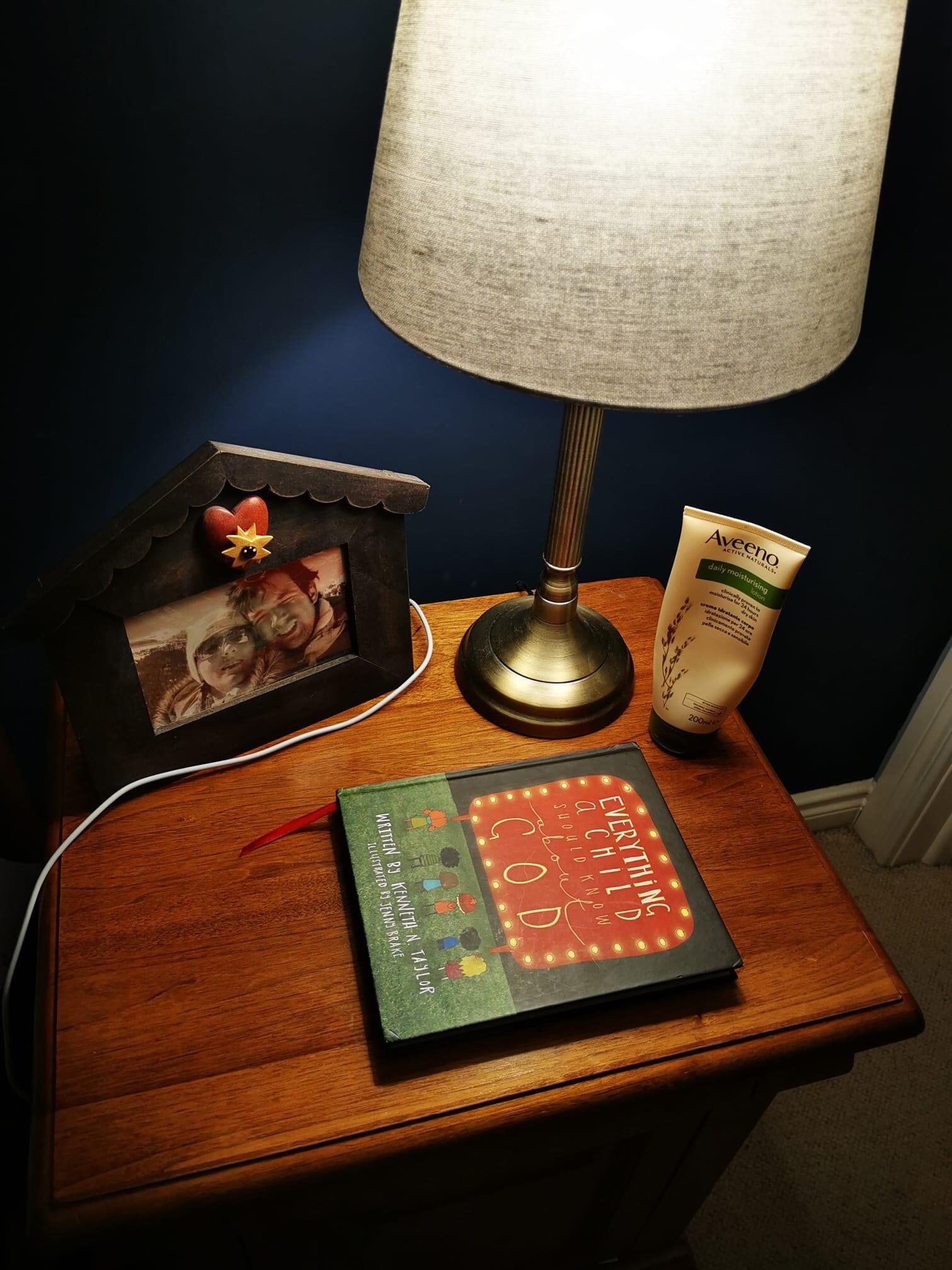
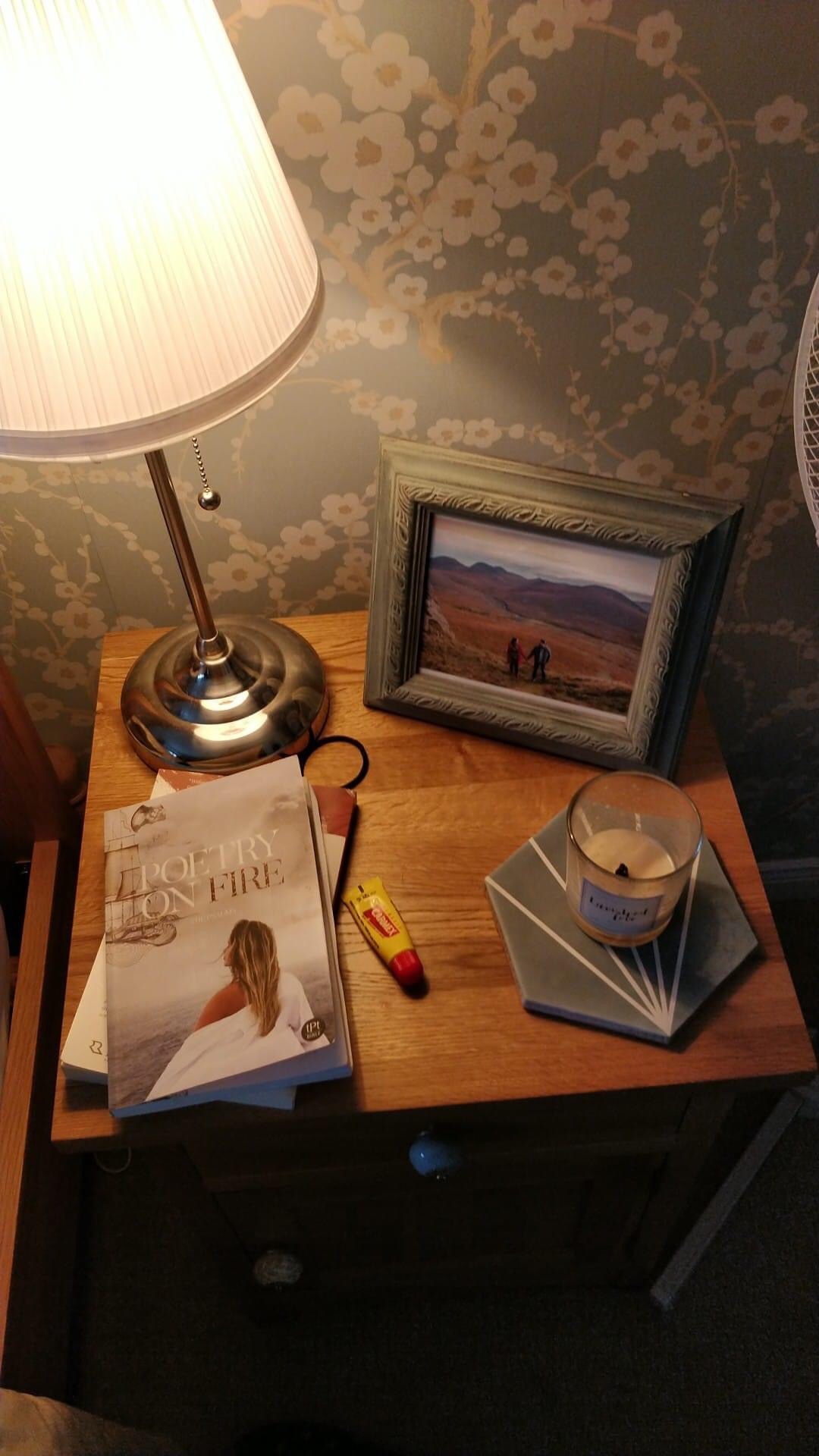
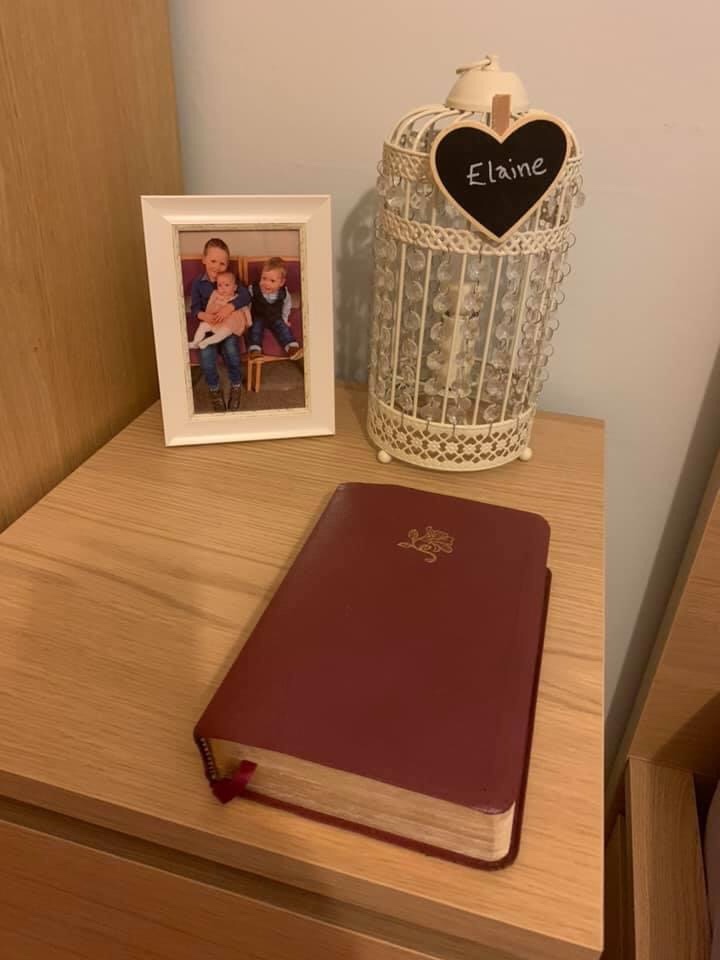
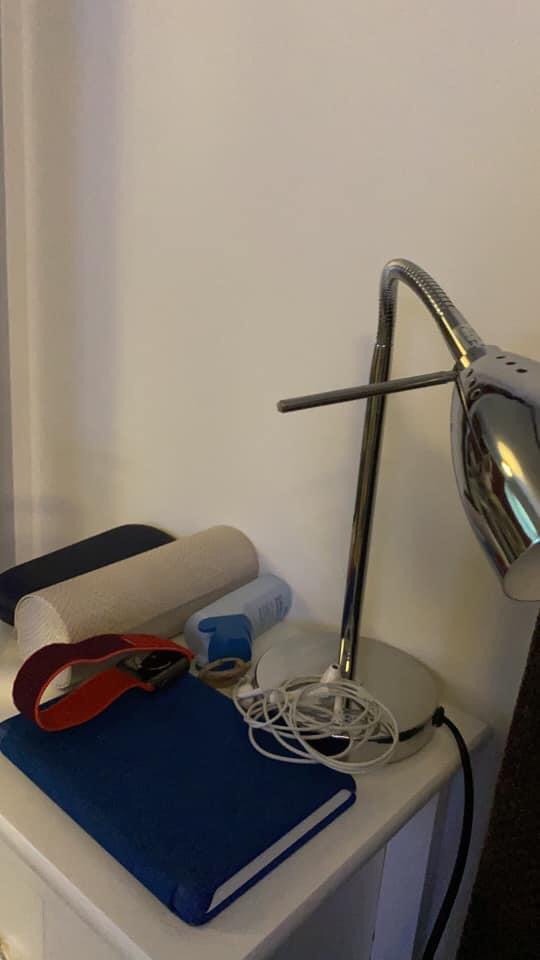
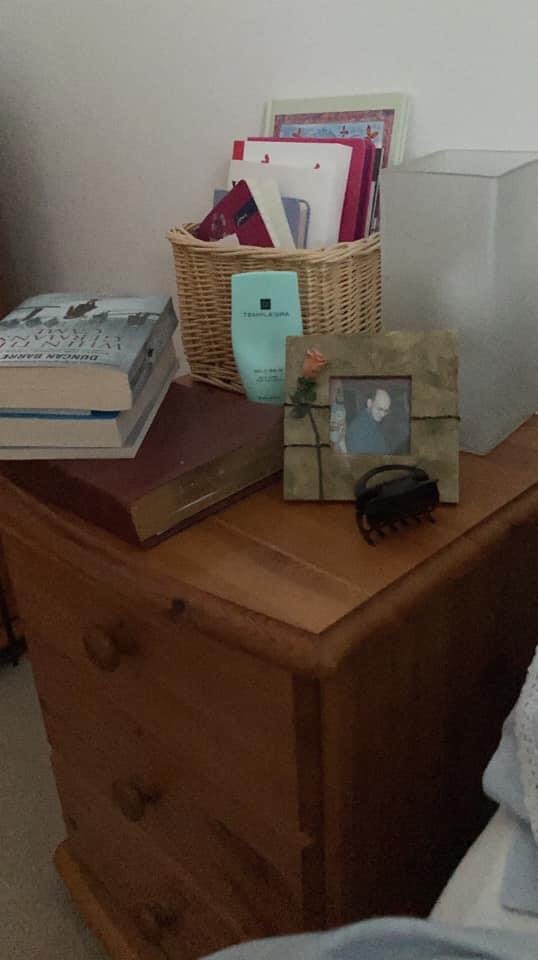
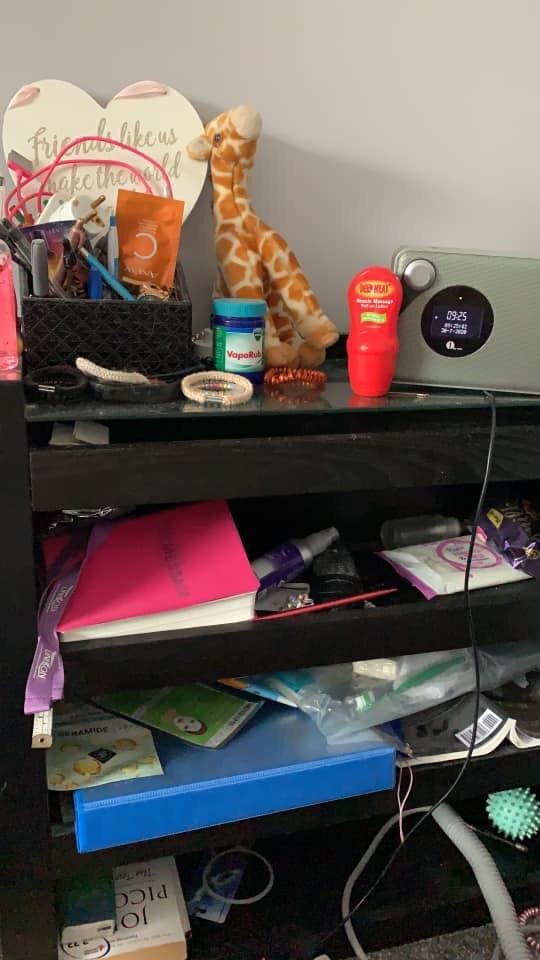
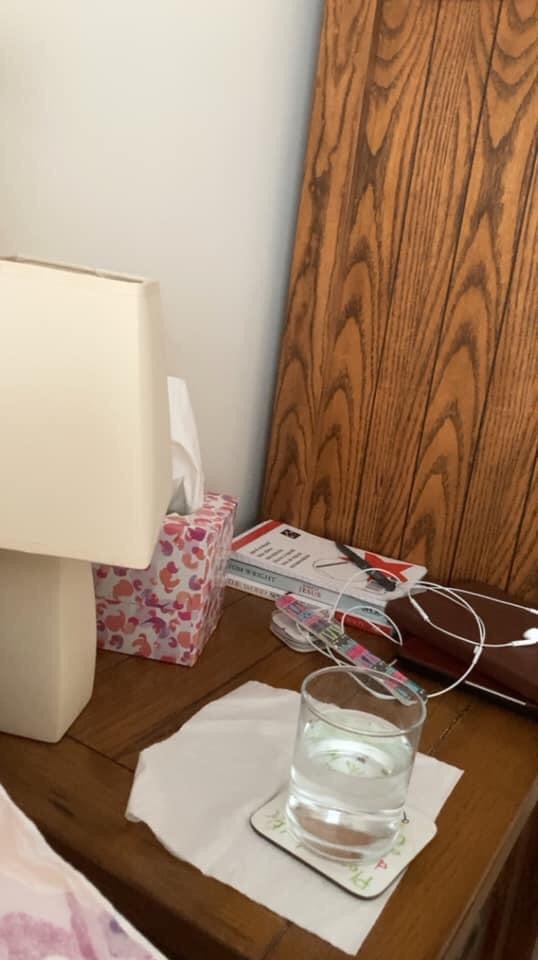
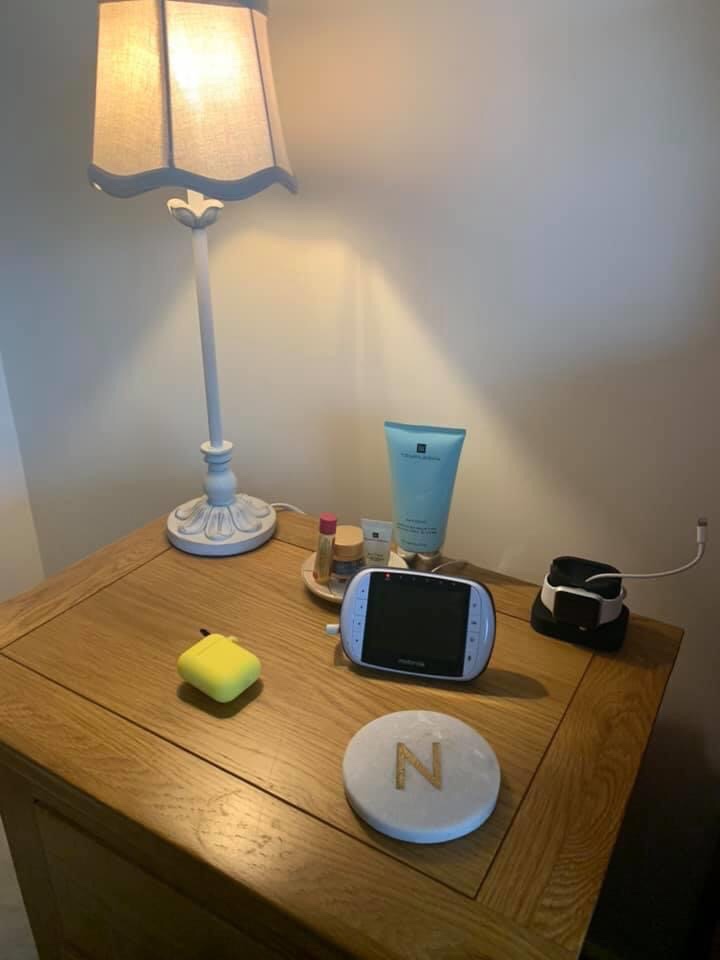
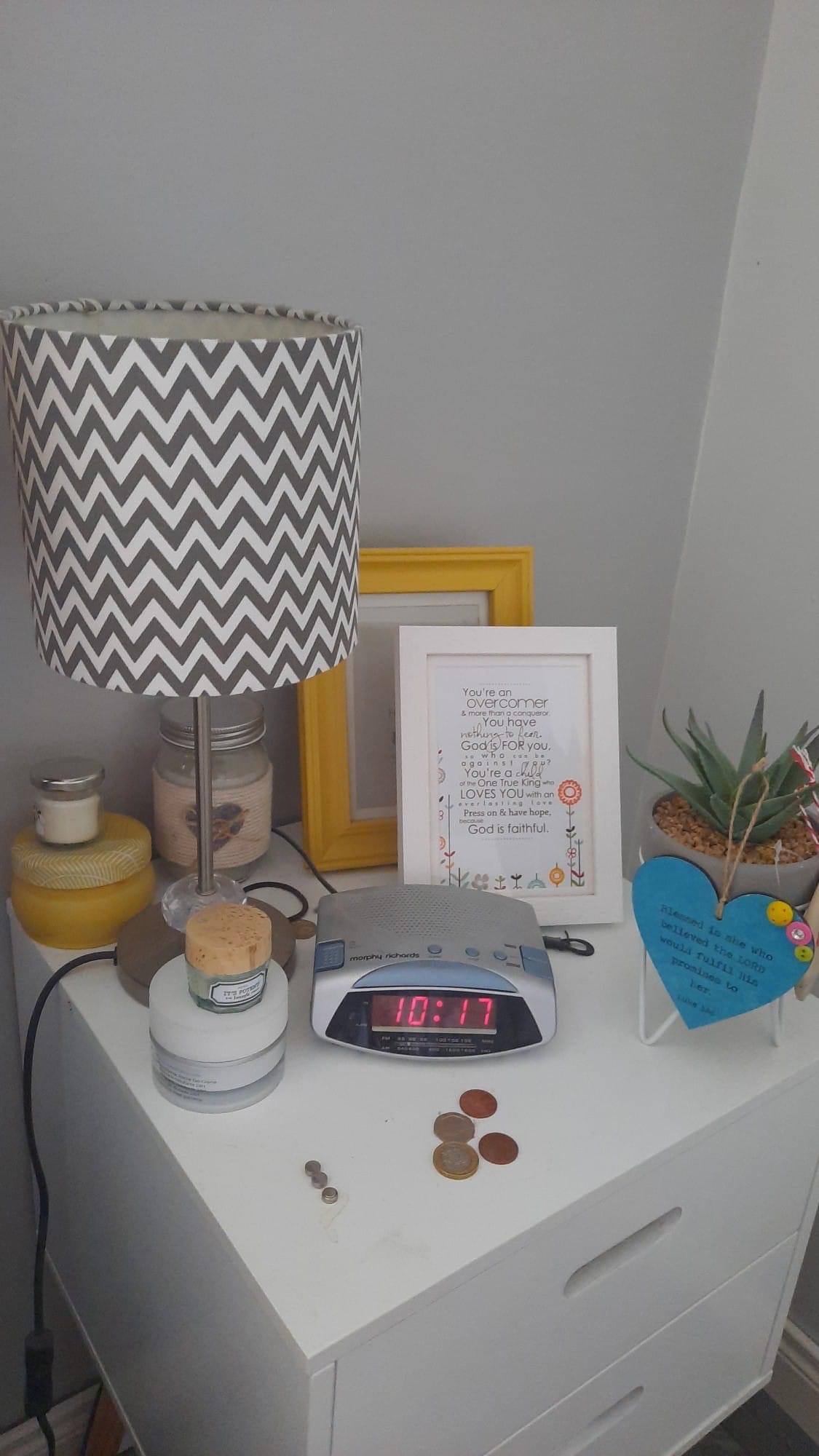
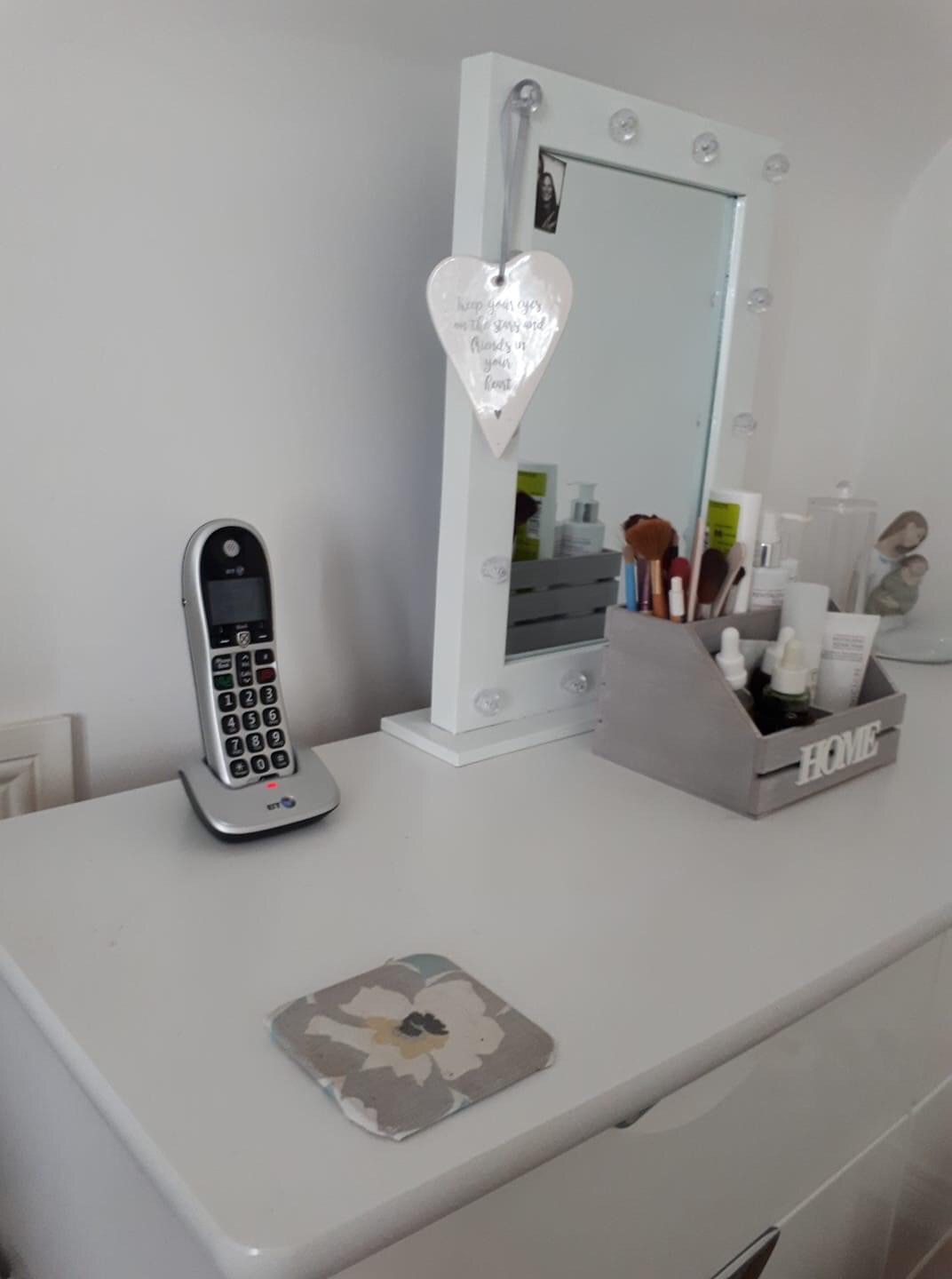
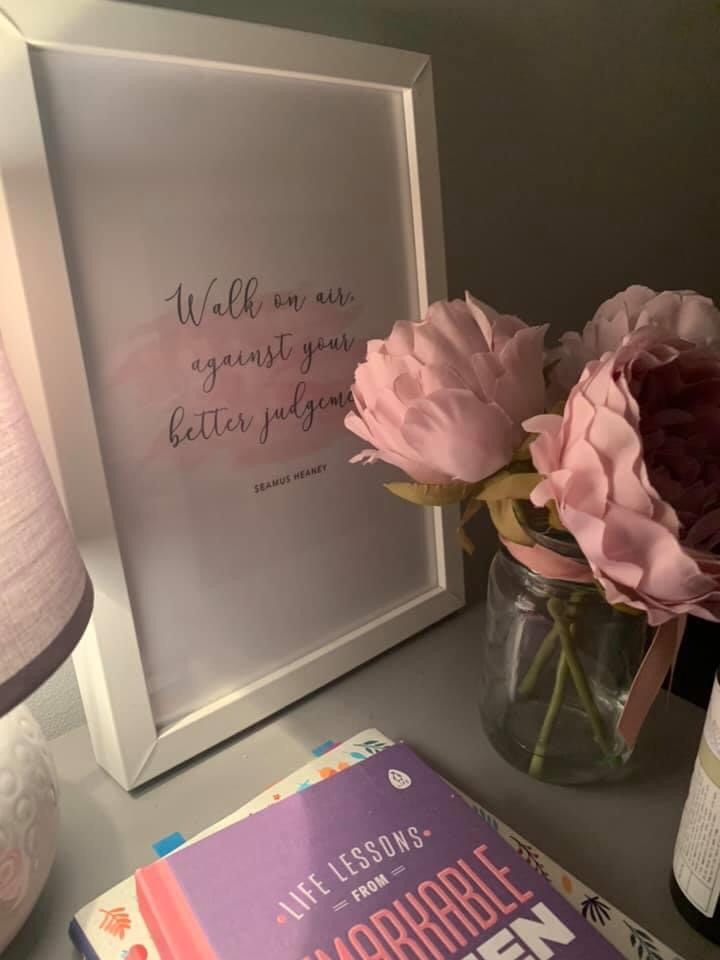
Today, the furniture beside our bed can also be a significant revealer about what is important to us. I asked some lovely people yesterday to post what they had on theirs – with fascinating results! Here are some of the pictures you posted:

Some of your bedside surfaces were dominated by beauty essentials, some contained primarily practical items like alarm clocks or medicine, while others prioritised meaningful objects.

Some of you sentimentalists kept kiddies’ artwork and family photographs, while others preferred to have no clutter at all. You are the minimalists of this world!

For some of you the space had a spiritual focus, while others had a more earthly flavour. I guess it depends whether you like morning motivation, afternoon inspiration or evening reflection!

My mum and dad’s bedside tables were completely different growing up. My dad had a couple of books, an alarm clock, and a pen drive with all his translation work on it, but my mum’s was like the leaning tower of Pisa. There was so much on there just ready to fall off if you brushed past the wrong way.

It reflected them beautifully. One focused, strategic, intellectual and single minded, the other personally involved with a lot of different people and possessing a great many passions.

Here’s the lowdown on mine.

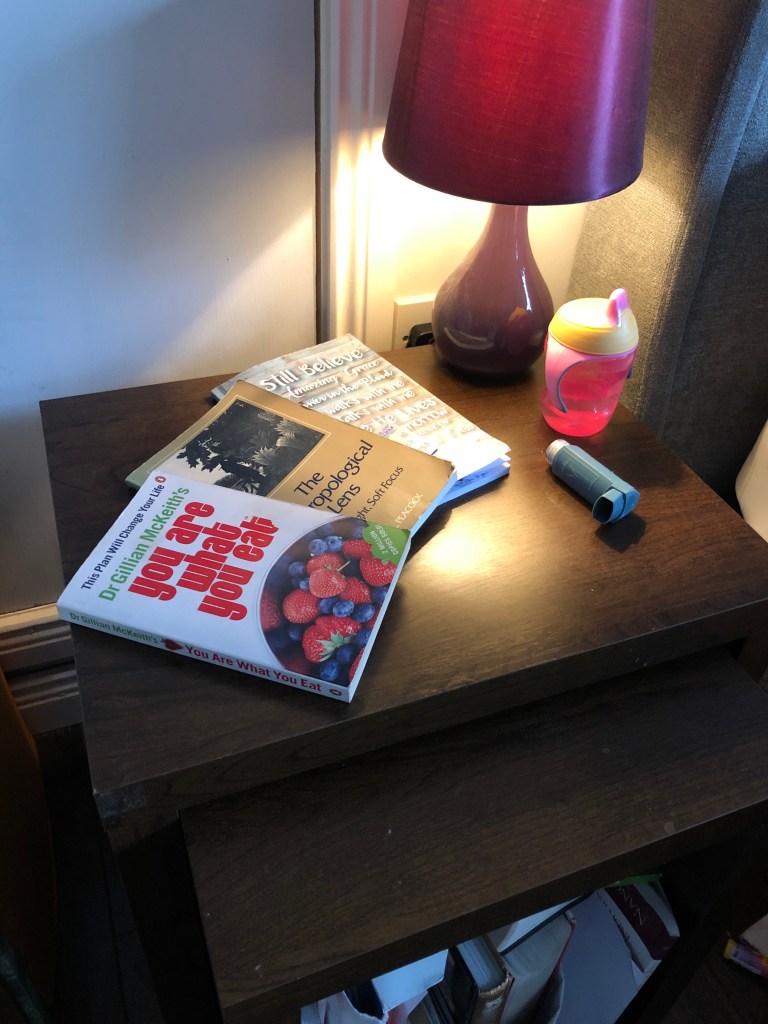
Currently perched within easy reach is a journaling notebook, as well as two books- ‘you are what you eat’ and ‘The anthropological lens.’ Not a mirror or beauty product to be found! The only practical items are a kid’s drink flask and an inhaler in case I can’t breathe during the night (because breathing is kind of a necessity 😂)

Oh, and in the process of taking this photo I also found my lost bank card underneath the pile of books! That says a lot about me! You can see a hint of the mess around the table here.

In other words, there you have it: three of my greatest passions in life – food, people and writing (not necessarily in that order😂). The phone is there too, but only in case someone needs to get in touch.

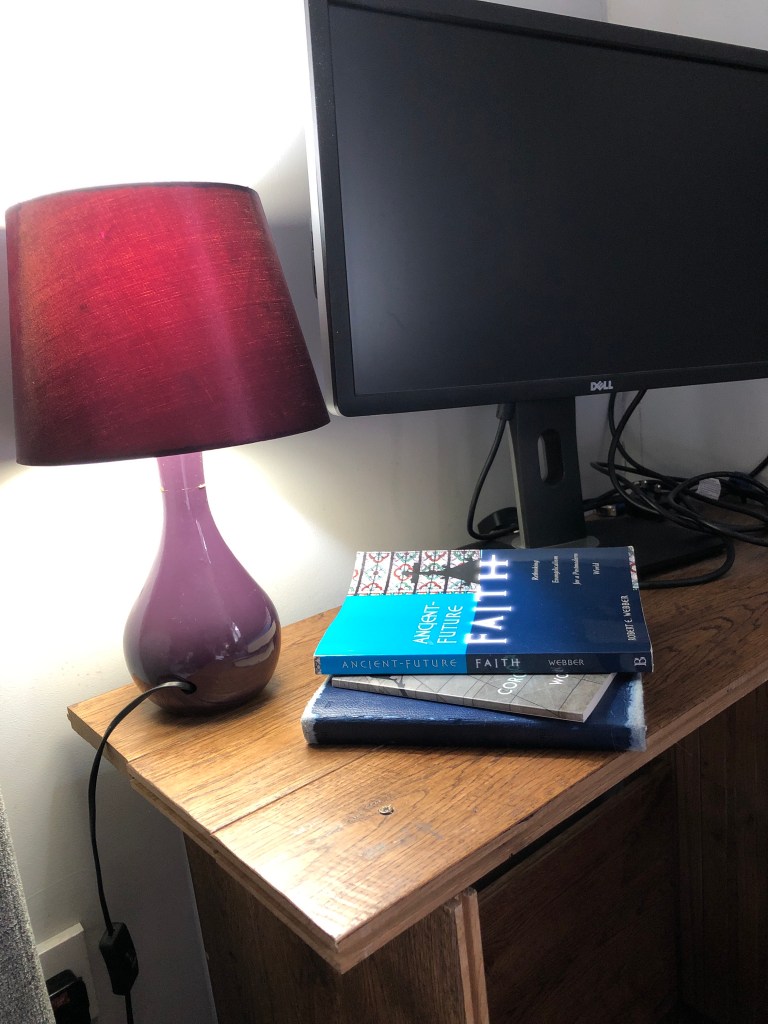
Bill’s is quite different. First of all, he made the table himself out of left over wooden floor. Anyone who knows him will see this as true to form! Then there’s a Bible, a computer and two books ‘Ancient-future faith’ and a book titled ‘Where is God in a Coronavirus world?’ So that’s three of his greatest loves right there: theology, technology and DIY.

That our bedside tables (or lack thereof) could reveal so much about us is something I’d never thought about before – until yesterday. It’s been a lot of fun looking through your lists and pictures.

But I suppose this whole lighthearted discussion can leave room for some reflection too!

🌱What do you think of as necessities in life?

🌱What do you feel the need to keep within easy reach?

🌱What’s important enough to you to sleep beside?

🌱What does all this say about you, or about the difference between you and your other half?

Just a bit of fun and food for thought for today,

H x

The masks we wear: protection or pretense?

They are just little pieces of cloth, but there has been huge controversy lately over the wearing of masks and whether or not they should be made compulsory in public venues.

Supporters say that wearing a mask is common sense, stops the virus from spreading, and shows consideration for others. The reason is simple: even handmade face coverings can protect others from being infected by blocking droplets emitted by speaking, coughing and sneezing.

Opponents argue that masks induce a false sense of security, are ineffective, overplay the seriousness of the coronavirus, and take away our freedom of choice. Some point to the cultural and relational repercussions of not being able to see one another’s faces – including suspicion, mistrust and disconnection.

Whether or not you agree with wearing physical masks in a public place (I’ll be wearing mine), there are some masks all of us need to remove from time to time.

Jesus had a lot to say about mask-wearing. Throughout the gospels, he uses the Greek word hupokrisis, which literally means ‘acting from behind a mask.’ It was likely that Jesus was referring to the actors who performed in the Sepphoris amphitheatre, just a few miles from his hometown Nazareth. These actors wore masks to help them portray different characters to the audience. Jesus often used this word to describe the Pharisees, who performed outward religious acts to gain the approval of their audience. Their obsession with the appearance of righteousness caused them to conceal the truth of their inward brokenness.

The reality is that it’s human nature to hide. We can so easily become preoccupied with superficial appearances and judgments!

A few years ago, the landlady of a house I was renting came round to ensure I was looking after it well. Of course I wanted to make the best possible impression. I cleaned and fixed whatever I could. I washed the grimy windows and trimmed the overgrown garden. Everything looked respectable.

But old habits die hard.

When D-day arrived, I was running out of time, so I stuffed everything that was lying around in the upstairs wardrobes. There were also a few places I’d missed cleaning, like inside the oven and the roof of the microwave. My landlady began her inspections by opening the oven door.  ‘Ah, the oven needs cleaned,’ she said. I started to feel a little uncomfortable. After she had looked in the microwave, she went upstairs and I could hear her opening and closing cupboards. By this stage, the embarrassment was painful! I was mortified that somebody else had become so familiar with all the hidden messes in my home.

We wear different kinds of masks in life. Sometimes we arrive at church, work or go out for dinner with friends knowing our inside messiness and yet only seeing the polished performances of everyone else. So we put on the mask to make everyone else think we are doing great too.

Other masks we can put on to protect others. We find ourselves thinking, ‘they have enough to cope with; they don’t need my stuff on top of their own.’ All the while our stressors build up within us to an unhealthy level, as we feel we have no safe space to share.

But what would Jesus have us do? Would he have us walk in pretense, or would he rather we let people into those ’cupboards,’ whose doors our pride or concern would otherwise prevent us from opening? Would he have us all carry our burdens alone, or share our struggles with others?

It is true that people who are open and honest about their failures walk with a limp. But that is what makes it possible for hurting people to catch up with us to ask for help.

When we take the masks off before God, we can be free to be ourselves and enjoy deep relationship with him. When we remove our masks with others, they become free to be themselves around us.

The recognition of brokenness brings an end to performances. Authentic connection becomes achievable. I don’t know about you, but I’d rather live in an imperfect community that’s honest and vulnerable, than participate in a ‘stained glass masquerade.’

Masks in a pandemic are worn to protect others. Some of the masks we wear in life we wear for the same reason. Maybe we need take those off around the right people. But often we spend so much time hiding our brokenness that we squander the depth of relationship available to us.

What masks are you wearing today? Which ones do you need to remove at the appropriate times, and which ones do you need to remove for good?

H x

The leverage of love: how to reach your child’s heart

We’ve all had those days with our kids where they test us to our limits. They get dirtier and messier than we’d like. They ‘push’ our buttons. They whine and fight with each other. They’re ‘ungrateful’ for the treats they are given.

The question I’ve been mulling over is, what is our parenting leverage in those moments? What influence – other than our authority as care giver – do we possess to achieve the desired change in our children’s behaviour?

Often the default in those moments is punitive discipline – we come down hard on the behaviour so we can squeeze the bad ‘out’, so to speak. Loss of privileges, threatening, shaming, grounding or smacking are common parenting techniques used to quash behaviours we don’t like.

But recently I’ve begun to think about the whole issue of discipline very differently. This is because not only is discipline training – and therefore so much more than punishment – I’ve also realised how often parenting comes from a place of:

  • Selfishness – making our lives easier
  • Habit – what we were raised with
  • Fear (of losing control or how others will judge our parenting)

The fact is, we are completely free NOT to use punishment if we don’t feel it to be the godly approach in that moment- even if we incur the judgment of those looking on.

I’m trying to reprogram myself not to immediately think- how can I stop this disobedience as soon as possible? Because discipline is not about making my life easier, or externals, or making sure people think I’m a great parent. It is being more concerned with the inward heart condition. How can I reach my child’s heart? How can I ensure they have a change of heart? How can I represent the loving authoritative discipline exemplified by Jesus?

Behaviour flows from the heart

Every behaviour has a cause – it comes from the thoughts and intents of the heart- how we understand the character of God, how we see ourselves, how we view others and how we perceive situations we are in. Actions are also influenced by our desires, wounds, hurts and unmet needs from situations and people.

So when I’m seeing unacceptable behaviour in my kids, I’ve found it helpful to ask myself, where is this coming from? And how can I respond like Jesus would?

Because while I thought of God as a cold, distant father, I ran from him, so I could hide from his scathing displeasure and conceal my shame.

But once I understood that it was actually when I was at my worst, when I didn’t love God or obey any of his laws, that Jesus chose to die for me, I wanted to live to please Him as best as I could.

Once I grasped that my Heavenly Father was infinitely close and loving in the times I messed up the most- my heart was captured by Him forever.

I’m not talking about a wishy washy kind of love that doesn’t confront or deal with behaviour. Christ’s love paints a very clear picture for us of our sin and how much we fall short of his standards. Wrongdoing should incur appropriate consequences. However, at the same time, this love covers our shame, and embraces us unconditionally while we are still in the mess of it.

It’s a question of love, for goodness sake.

Such love has no fear, because perfect love expels all fear. If we are afraid, it is for fear of punishment, and this shows that we have not fully experienced his perfect love. (1 John 4:18)

  • Do our kids run from us, or to us, when they do something wrong?
  • Does understanding the great love of God make us want to run from Him, or to Him?

It is His goodness that leads us to repentance (Romans 2:4)

So next time your child disobeys you, you might find it helpful to ask:

  • ‘How would God show His love to them in this moment?’
  • ‘What does divine goodness look like in this situation?’
  • ‘How can I make my children aware they have done wrong whilst at the same time assure them of my deep, unconditional and constant love for them?’

What are we teaching?

Maybe ‘teaching our children a lesson’ doesn’t always teach the lesson we want. When punishment is our automatic reaction, they learn that bad things happen when they misbehave. But they don’t learn how to change direction completely. When we know we are loved despite our mistakes, we are free to work on them.

So if I want to reflect in my parenting the love that my Heavenly Father has for my kids, and allow change to happen from the inside out rather than the outside in, it is definitely worth the effort to invest in loving influence as well as firm authority.

Don’t get me wrong, I fail at this every day of my life. I get it wrong many times a day. At times I’m harsh and anything but an example of God’s love or goodness. That’s when I’m all the more thankful for His loving kindness and mercies that are ever new.

H x

Facing your demons: fighting fear with courage

The sounds of Africa by night can be scintillatingly soothing. I fondly remember lying in bed at night listening to the whirring of ceiling fans, the choruses of crickets, and the pounding of heavy showers on tin roofs.

But the sounds of Africa by night can also be chillingly haunting.

  • The shriek of a witch doctor performing a curse
  • The moans of a child hallucinating with malaria
  • The bloodcurdling screeching and droning chants of cultish groups performing exorcisms.

It was the last of these that I remember being terrified by as a child.

In Ivory Coast, we lived for a time near a compound of ‘Christianisme Céleste’ devotees. Their worship rituals didn’t seem quite so frightening by day, but during the night, to a young girl of seven, it felt as though gnarly fingers of darkness, carried by their songs, were reaching through my window… swirling round my bed and always on the brink of snatching me away.

It got to the point where I was terrified each night to go to bed, because I knew that awful singing, chanting, drumming and screeching would begin all over again.

One day, my mum decided enough was enough. I’ll never forget the steely look of indignation on her face as she took me by the hand, and marched me round the corner to the entrance of a compound with whitewashed walls and a blue sign.

Our appearance caused quite the stir among the crowds of devotees, who were dressed from head to toe in white. Why on earth was this angry woman marching over with her young child?

It was more than a little intimidating when a young man promptly shouted at my mum to take off her shoes. (We didn’t know at the time that this was an important emphasis of this group – probably inspired by the story of Moses and the Burning Bush.)

I felt awkward and frightened. But my mum seemed wholly unperturbed.

I heard her assure them briskly in no-nonsense French that God would hear their prayers just as well if they prayed them with a little less volume and if they moved their exorcism circle to the other edge of their compound – not right beside our bedroom window.

Believe it or not, a short time later they actually obliged.

I’ve never forgotten that event. That day taught me something very important.

I learned that it’s only when we have the courage to face up to our fears that things can ever change.

Fear magnifies. It makes the shadows bigger and the nights longer.

Fear torments. It grows and multiplies like cancer, doing untold damage in the process.

Courage, on the other hand, switches the light on. It exposes the source of the fear. It makes the shadows disappear. It forces us to acknowledge that the fear is there. But the fear isn’t as big as it first seemed.

Courage motivates. What we fear is still present, but at some point the determination to face it takes over.

Courage gives you the gumption to march over there and give that fear a good talking to. Enough is enough! This far and no further!

Courage transforms. Just because you face something head on, doesn’t mean your circumstance will change. But something within you will. And that’s well worth fighting for.

Fear magnifies. It makes the shadows bigger and the nights longer.

Lookingforeden

How do we defeat the gnarly fingers of fear in our lives?

🌱Acknowledge the fear is there

🌱Decide enough is enough

🌱March right over there and give it a good talking to

Then see what changes take place!

H x
Making room when you can’t share space: showing hospitality in a pandemic

I’ve been thinking a lot about hospitality lately. 

  • How do you do hospitality with 2m between you?
  • How do you make room when you can’t share your space?
  • How can you be social when you have to social distance?
  • How can we welcome our neighbours when they do not welcome a deadly virus we may accidentally pass on to them?

Before lockdown began, it was our habit to invite someone into our home at least twice a week. We were intentional about that because not only do we love having people over, we believe tasks and work can never take precedence over people. Welcoming others in prevented us from becoming too comfortable in our own wee bubble.

But current circumstances mean that over the last few months we have been forced to do just that: stay in a ‘bubble.’ 

So what do we do now?

Because the aspects of hospitality that seemed important before now appear inconsequential or simply out of reach.

For example, I used to get really frustrated trying to tidy my house before guests came round. When there’s kids about cleaning is a bit like treading water – you never seem to get anywhere! But now people are in each other’s houses a lot less, and this preoccupation seems kind of irrelevant going forward.

Before COVID-19, ‘a warm welcome’ may have conjured up images of a roaring fire, Good Housekeeping interiors, a substantial supper and attentive service. Now – notwithstanding the fact that hardly any of us live up to these ideals anyway – they seem somewhat extraneous under current restrictions.

As I’ve thought back over my most treasured memories of hospitality, it felt tempting to be wistful at how far out of reach some of them are to me now:

• Falling into a friend’s spare bed for a much longed-for nap and coming down two hours later to freshly made pizza and well-cared for kids.

• Sipping a steaming cup of tea in the candlelight, with a purring cat curled up on my lap.

• Lifting a big pile of washing off the sofa onto the floor and sinking down into it (the sofa, that is – not the washing!) for a morning heart-to-heart.

• Being told to put my feet up, handed a blanket and a plate of my favourite oatmeal biscuits, then dozing off for the afternoon.

• Squeezing elbow-to-elbow around a table in a tiny kitchen with steamed-up windows and tucking into a bronzed turkey that was almost the size of the room itself.

As I’ve reminisced, however, I’ve realised that in all of these memories, it wasn’t so much the food and ambience that were important, but rather the message communicated to me by the people who offered them:

Come and share my life. I have made room for you – not only in my home, but in the recesses of my heart.‘

Photo by Kelly Lacy on Pexels.com

You see, in the midst of these moments, I didn’t once measure the warmth of the welcome by the surroundings, the heat of the fire or the sophistication of the supper spread. What I treasured was the feeling that surrounded my heart as someone offered me the best of what they had: food, time, attention, love and care.

While we can no longer entertain squeezing ourselves like sardines around a dining table or having a nap in someone else’s bed, these memories have reminded me that what you serve to others and where it happens doesn’t matter as much as how you offer it and the heart you offer it with.

So what might hospitality look like going forward? Here’s some food for thought:

  • It might be your lovely neighbour delivering you a homegrown lettuce and punnet of strawberries.
  • Or distributing some scones you’ve made to the residents of your street.
  • Or taking the time to see if friends need shopping or letters need posting.
  • Or chatting leisurely in the street.
  • Or starting a community Whatsapp group so you can keep in touch and ask for help if needed.
  • Or even looking after a pet while its owner is on holidays.

… It’s making room for those extra interactions

… It’s slowing down to enjoy meaningful conversations. 

… It’s offering the space in our lives, that we didn’t have before, on a plate to others.

Photo by Burst on Pexels.com

What you serve to others and where it happens doesn’t matter so much as how you offer it and the heart you offer it with.

lookingforeden

Before lockdown, ‘making room’ meant cleaning the house and clearing a couple of hours in our packed schedules.

Before lockdown, ‘making room’ meant scrambling around chucking things into cupboards and wiping down surfaces; so when guests arrived we could be present to the people in front of us, not distracted by a splattering of spaghetti Bolognese on the floor or the muddy footprints at the front door.

So maybe it’s not so bad that things have changed now. After all, it’s during challenging and perilous times that little things given with a lot of love make the biggest impact. It’s when we offer immediate and tangible care that our neighbours realise we want to do their bodies and souls good!

Christian hospitality shines brightest in challenging, perilous days. Shallow interactions thrive on shiny surfaces and glossy first impressions, but deep friendships are forged in the real stuff of life.

Because hospitality is not just about “opening our doors, but opening our very souls.” (Rev. Mark Suslenko). It’s not packing meet ups into your diary… but offering people your inner space, giving them sustained attention, and meeting the needs of the people who are right in front of you,

What does hospitality look like for you these days? I’d love to hear your thoughts.

H xx

Shallow interactions thrive on shiny surfaces and glossy first impressions, but deep friendships are forged in the grimy stuff of life

Lookingforeden
Photo by Harrison Haines on Pexels.com
  • The broken shoe
    I gazed in wonder as our little car crawled through streets teeming with crowds, carts, cows, cacophonous patterns and colors, and the occasional overturned bus. Upward, there was a clear, cloudless sky with beating sun. Ahead, though there seemed not a clear path to be found, countless obstacles somehow parted before us as we madeContinue reading “The broken shoe”
  • When I lost my voice
    Stop missing out on what you are unintentionally drowning out 💕
  • When you’re lying in a sea of odd socks
    I was literally lying in a sea of my own odd socks.
  • Beware of the ditches!
    It was my first day at boarding school. I was the grand old age of seven, and this was the most exciting adventure I’d ever had. Imagine it: four little girls the same age, from four corners of the world, nestled in bunk beds at night under mosquito nets and stumbling through corridors in the dark with torches when the part-time generators went off…
  • What one thing would you wish for?
    I asked my six-year-old a pretty deep question today. Zoë, is it more important to be clever, beautiful or kind? Her wee eyes fluttered up to the sky and back again, which is what she always does when she’s deep in thought. ‘Kind, mummy.’ ‘Yes honey. If you’re clever and beautiful, but you’re not kind,Continue reading “What one thing would you wish for?”

Can we stop pretending, please? Where denial helps us and when it starts to hurt us

I’ve been heartbroken this week reading news reports about the Coronavirus parties people have been holding to challenge the reality that COVID-19 is, in fact, ‘real.’ Some of the stories of the consequences of reckless and irresponsible actions have been totally heartbreaking.

It’s as if some people have chosen to live in an imaginary world, in order to escape the unsettling reality of what is.

My Zoë has a wild imagination. One minute she is a twirling and skipping fairy princess; the next she’s pretending to be a gurgling, crawling baby. When she’s fully in character, it can be a bit of challenge to bring her back to earth and to establish anew that she is – in fact – simply herself.

The other day I had to tell her she couldn’t run about in her Rapunzel dress because it was too long and she could easily trip and hurt her arm (which is currently in a cast) again.

The devastation that ensued was quite something. ‘But I AM a princess, and princesses don’t wear trousers,’ she protested, as the tears streamed down her face. The reality of the situation brought my little drama queen to the depths of despair.

It seems, too, that human responses to crisis can be found somewhere on a spectrum between these two extremes.

The first extreme is to deny that the difficulty even exists, turning away and hiding from it. This reaction results in a disconnect from reality and is accompanied by behaviour that seems reckless and irresponsible to others.

The second extreme is to be so weighed down by the reality of trials that they are magnified exponentially and fear sets in. This response fixates on difficulty to such an intense level that everything feels hopeless.

Both responses aren’t healthy, and yet – in the case of this pandemic – we’ve seen both in action.

We were at the seaside yesterday and the close proximity of the crowds was remarkable to me. Everyone seemed to be blatantly throwing caution to the wind. It was as if they were totally convinced – like a child deep in imaginary play – that they themselves were Superman or Mrs Invincible.

But why is it that so many are sticking their head in the sand and refusing to accept what is real?

As I’ve been thinking this over, it’s occurred to me that denial is the first stage of grief – and that this might give some insight into what is going on.

The 7 stages of grief (Kubler-Ross)

– Shock and denial.

– Pain and guilt

– Anger and bargaining.

– Depression and isolation

– The upward turn.

– Reconstruction and working through.

– Acceptance and hope

In this health crisis, people are grieving the ‘normal’ that was. And rightly so. But when events are too painful for people to cope with, denial often kicks in.

When you are grieving, denial is your body’s way of giving you time to adjust to distressing situations.

But it is never meant to be a permanent condition.

Denial should be a temporary mechanism that helps us process a frightening truth. It helps protect us from the realities of our lives until we can begin to cope with that truth and have hope again.

So at some point, grief should work its way through to some form of acceptance of a ‘different, new normal.’

And yet, it can be tempting to live in a perpetual state of denial in an attempt to avoid facing what is real.

Steven Taylor, a professor and clinical psychologist, calls one type of denial an ‘unrealistic optimism bias.’ It’s a tendency to minimise threats and to see yourself as being more invincible than the average person.

But please let’s not pretend all is normal when it’s actually not.

🌱If we pretend we are impervious to sickness, we will put ourselves in unnecessary danger.

🌱If we pretend we aren’t in a pandemic, we can put others at untold risk.

🌱If we pretend we aren’t at all unsettled by the uncertainty ahead, we prevent others from feeling safe to share their worries and concerns with us.

🌱If we pretend we don’t have areas of brokenness in our lives, then we don’t leave our lives open to healing.

It’s part of human nature to throw pat answers at a problem that are meant as quick fixes. For example I’ve heard this one used – ‘As a man or woman thinks, so he or she is.’ (Proverbs 23:7) The implication here is that you can ‘think yourself’ into being out of danger. You just need to believe you’ll be ok, and you will.

Fact is, believing falsehoods to the nth degree won’t actually do anything for us. If the thoughts we think are untrue, we will live deceived.

It is only when we fully face up to the situation we are in – that is when real change in our attitudes, hearts and minds can begin.

🌱I may be facing many kinds of uncertainty in this crisis, but that doesn’t mean I don’t have the certainty of heaven.

🌱Yes, I may have struggles and heartaches, but when I recognise that, I become ready for healing.

🌱Yes, there may be danger out there, but I can take positive steps to protect myself and others.

🌱Yes, this situation is tough for many, but it won’t last forever.

Let’s not resort to pat answers at this time. Let’s face up to where we are, think of others, and allow God to change our attitudes and responses in the process.

H x

Let’s stop pretending we have all the answers

And bow down our heads and pray

Denying the problems we now have upon us

Won’t keep them hard times away

Merle Haggard

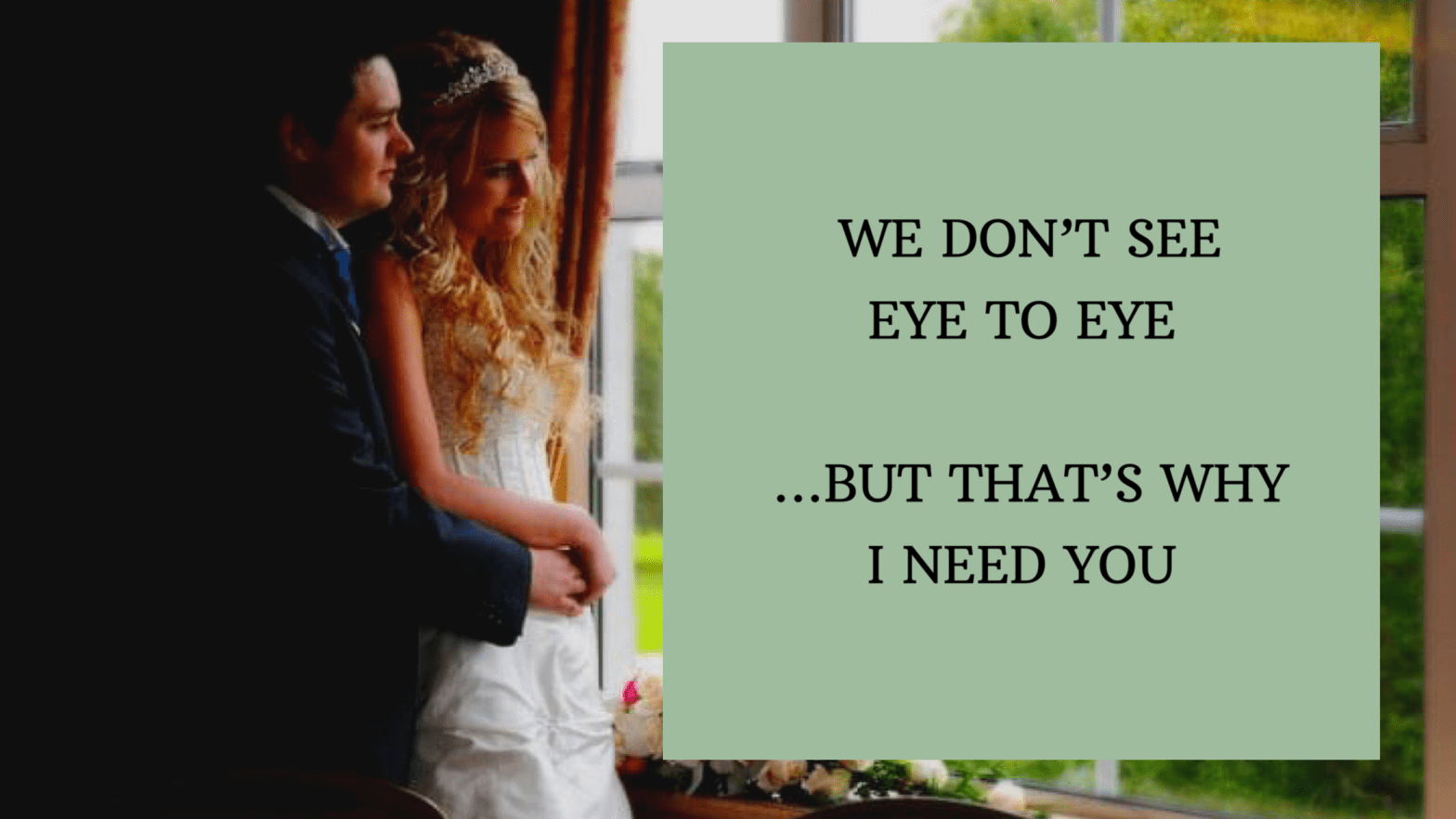
We don’t see eye to eye, and that’s why I need you: the benefits of conflict in relationships

I’m convinced that the exact moment Bill and I fell in love was right in the middle of a heated theological discussion.

He loved that the girl in front of him had a brain and a voice, neither of which she was afraid to use. She loved the fact that the boy in front of her didn’t pretend or flatter, but was honest and passionate about the things that mattered.

Ever since that first altercation, at the foundation of our relationship there has been a deep reciprocity and understanding that we respect one another enough to be able to disagree.

And we have learned a lot from each another as a result.

One of the things I have learned that it is ok- on occasion – to be strong and assertive, and to throw caution to the wind when considering the way forward. And he has learned – also on occasion – to be influenced by others’ opinions and be cautious about making decisions.

In our case, it’s most definitely iron sharpening iron, though sometimes the moments of friction can smart a little more than either of us would like.

Young love 💕 (me at 18, and Bill at 21)

The truth is, though, that all of us grow through the right kind of conflict. Not through the bullying, domineering, manipulating or controlling kind – but in the midst of the loving, reciprocal and transparent kind.

I remember my closest childhood friend saying something I’ve never forgotten, after we had a disagreement at age 13 – ‘You just always have to prove your point, don’t you? Whatever the cost.’ I didn’t like this at the time, I can assure you. But she was right. And her summation has operated as a kind of Jimminy Cricket check and balance ever since.

Many years later, another friend rubbed salt in just the right place when I was sharing how hurt I was as a result of someone else’s thoughtlessness. She said, ‘you’re annoyed you haven’t got all your ducks in a row, aren’t you?’

Tough, but also fair.

In that situation, things weren’t turning out how I thought they should, so I was all in a flap about it. I learned from that conversation that an adjustment of my expectations of other people was needed.

Why does speaking truth and disagreement matter so much in our relationships? Why does Proverbs 27:6 tell us that ‘faithful are the wounds of a friend?’

Because people who really love you tell you the truth. They don’t butter you up, fan your ego, or fuel your delusions. They encourage you when you need it, but they warn you when your attitudes, words and actions warrant it. They do it because they want the best for you.

None of us are perfect. All of us need accountability. All of us need to be challenged now and then.

This is why, if you occupy any kind of leadership position, it’s so important not to surround yourself with people who will always agree with you. Instead, make a decision to welcome diversity and embrace different opinions. In the process, you’ll generate new ideas. You’ll understand more about yourself. You’ll learn to communicate more effectively and to appreciate different perspectives on life.

So when was the last time a friend or team member challenged you on something you did or said?

I remember one time when someone came to see me privately and lovingly shared their concerns about how I’d handled something in a meeting. I can honestly say that in that moment they won my eternal respect. They loved me enough to be candid, concerned and respectful, all at the same time. To me, that is worth its weight in gold.

People who don’t really love you talk about you behind your back. People who really care confront you to your face. They tell you when you aren’t seeing eye to eye, and that’s why you need them. You need their insight. You need their perspective. You need to see their heart for your heart. You need them to grow.

But if it’s been a long time or forever since you felt the jag of healthy disagreement or confrontation, it may just be that you’re surrounding yourself with the wrong people.

Could it be that you are now thinking of a moment when you walked away from someone who challenged, cautioned or corrected you with wholly loving intentions- just because what they said offended you? Perhaps you need to revisit that moment with a different perspective and be willing to go back and make things right if necessary.

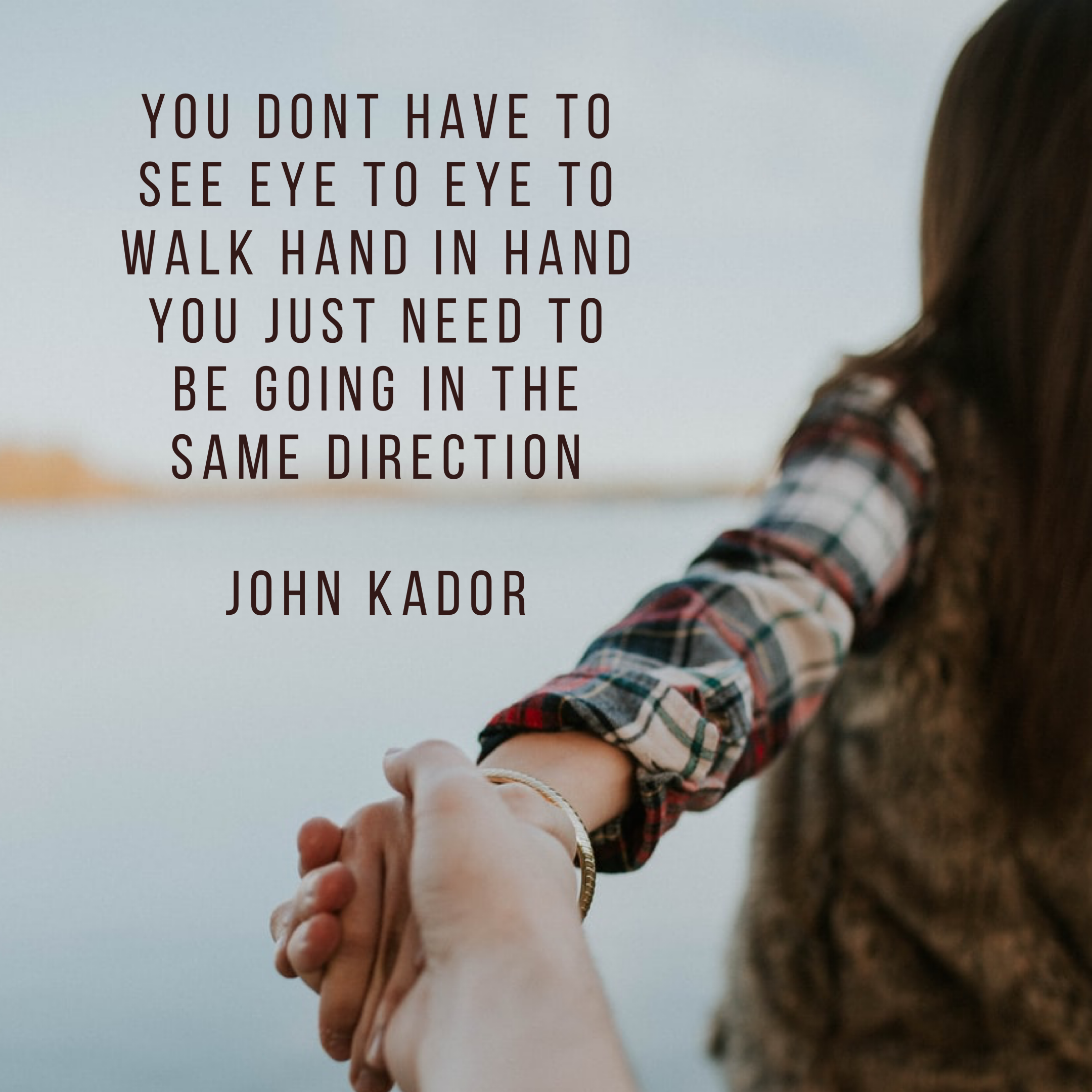
Im thankful for the people I don’t always see eye to eye with, but who walk with me by the hand, share their heart with me, and are walking in the same direction.

H x