
Are you fluent in love?

It takes time to learn a new language. A long time in fact. In order to become fluent in French, for example, I’d still need to spend at least three months living in France, even after learning it for years in school.

And just as it takes time to learn a language that’s not your own, it takes time to learn how those around you best give and receive love.

The people in my family communicate love in very different ways. Different things make them feel special. Different things make them feel warm and fuzzy inside. And so I find that each new day is a new step in the journey of learning to love well.

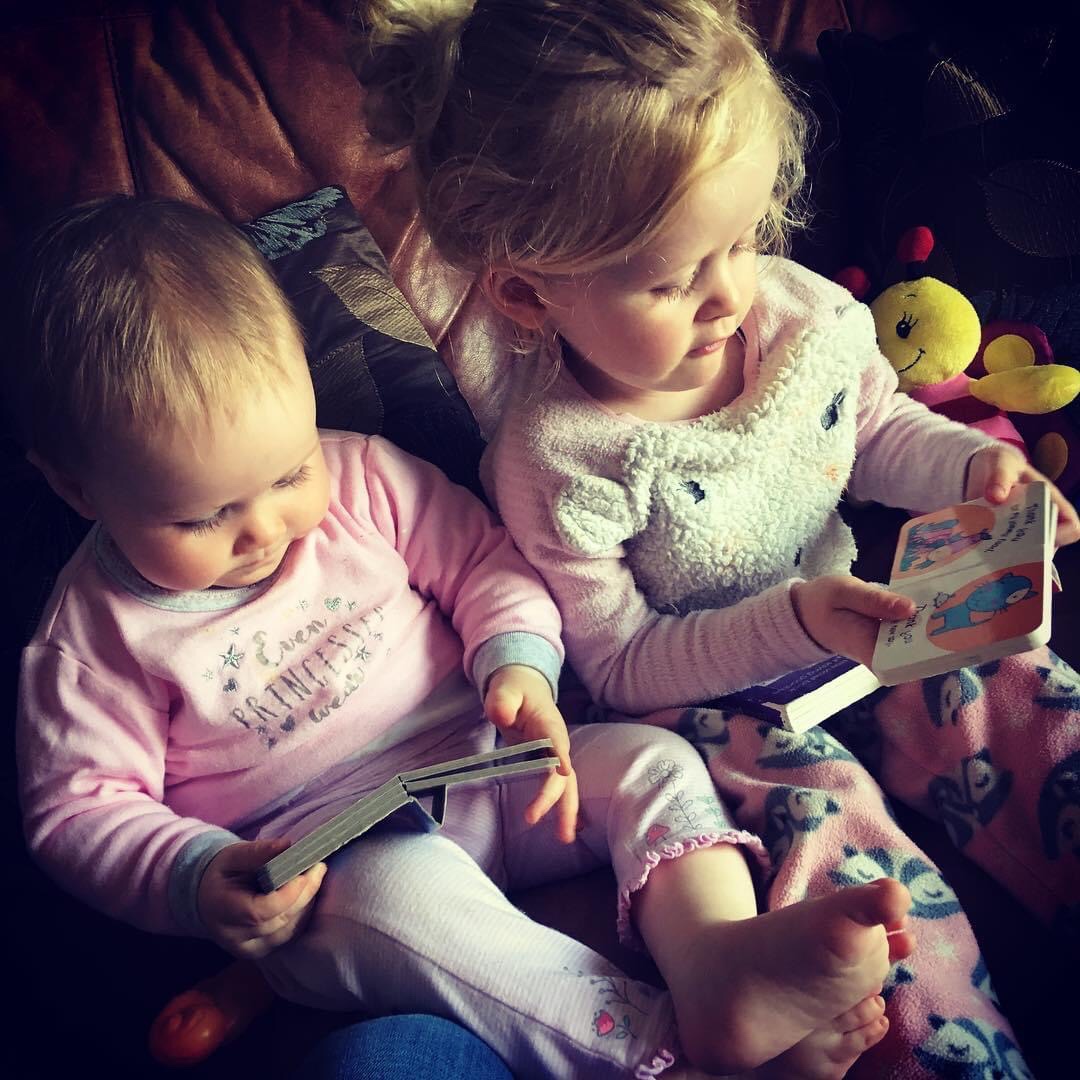
For Zoë, nothing says ‘I love you’ more than sitting on the floor with her and doing imaginative play. Her main love language is most definitely quality time. I really struggle with imaginative play; but I try to do it each day for a little while so that little love tank is filled up.

Eden is the cuddliest little article. For her, nothing says ‘I love you’ more than a bedtime snuggle and me allowing her to twiddle my hair through her fingers. Her main love language is indisputably touch. Sometimes it feels a bit claustrophobic, but because it makes her feel comforted and secure, I let her do it.

We joke that bill is the shallowest family member – his love languages are touch and gifts, in equal measure. If you want to reach Bill’s heart, buy him a ‘Jammy Joey’ (or a new guitar 😀) from the shop and give him plenty of hugs. For a long time I couldn’t understand why my compliments didn’t mean that much. He enjoyed them, but they didn’t mean the world. I was just speaking the wrong language! I’m still working on speaking his.

Nothing says ‘I love you’ more to me than when someone takes the time to listen to me, or to offer heartfelt words of encouragement. I’m words and time. Because Bill doesn’t need a lot of words of affirmation, he is still learning to speak aloud the positive things he is thinking!

You know where I’m going with this, right?Most of you will already have heard of Gary Chapman’s classic, ‘The five love languages.’ He talks about five main ways of expressing and receiving love: Words of Affirmation, Acts of Service, Receiving Gifts, Quality Time, and Physical Touch.

To know what your main language is, ask yourself, ‘How do I express love most naturally?’

💜 Do you love doing something for someone?

❤️ Are you quick to verbally encourage someone?

💛 Are you willing to spend a lot of time and attention on other people?

💙 Do you love giving personal and thoughtful gifts to others?

🤎 Do you naturally reach out to hug someone?

In the reverse, what do you ask for from others most often? A back rub? A weekend away? The grass cut?

Knowing how you and your other family members give and receive love is the first step to closer relationships.

Imagine if a husband knew that doing the dishes was much less important to his wife than buying her flowers once in a while?

Or what about the wife who showers her husband with compliments when all he needs is loving touch?

Or parents who continually buy their child gifts, when playing a game with them would speak greater volumes.

See how miscommunication can so easily happen? Don’t assume what you find meaningful others will too. Even sincere efforts to love can easily get ‘lost in translation.’

Why not take a moment today to ask the people in your life what makes them light up inside? You could begin (or continue) learning how to speak love, their way. Because when love lights someone up, everyone around feels the beauty of the glow.

What language do you speak when it comes to love? And how have you been learning to love others better?

H x
Fact or opinion? A question for handling criticism

‘Sticks and stones may break my bones but words will never hurt me.’

I don’t know who first said this, but I can’t understand why it became so popular. Because it’s quite simply wrong. I would re-render it as:

‘Sticks and stones may break my bones, but there’s nothing like words to bring you down.’

Some of us can handle criticism better than others. On the one hand, I’m a bit envious of the thick skinned among us, and I want to know your secrets! But on the other hand, psychologists say you need five positive affirmations per one negative comment to thrive. That means that no matter how self-confident we are, a lot of us are operating at a deficit of positivity a lot of the time.

No matter how thick skinned you are, I think it’s safe to say none of us enjoy being criticised. But we can teach ourselves to evaluate any thoughts, feedback or comments more objectively; to learn what needs to be learned and leave behind what needs left behind.

Here’s a personal example. One of the most important heart questions for me is, ‘do you really care?’ Just as a major need of mine is to feel cared for, I try my best to care for others. I don’t always do it well, but it’s really important to me.

So one of the most devastating things someone could accuse me of is being cold or uncaring. It’s happened to me before, and I lost a lot of sleep over it. But when a kind friend helped me lay out the evidence and weigh it up, I realised that the accuser didn’t actually know the details of how I spent my time or who I spent it with. But I did, and there was a lot they had assumed that was based on an incomplete picture. Their assessment was not a fact, it was an opinion. And it wasn’t true. Now, I could let it go more easily, without holding on to it, carrying it around, or trying to justify myself to that person.

That episode made me realise the distress that comes from treating every thought in our mind, opinion about us or assumption about us as automatically true. Just because someone has an opinion, does not mean it is valid. Just because someone has made an assumption about me, does not mean it is accurate. And just because I subconsciously believe something to be true about myself, it doesn’t mean I’m right.

This world’s people-pleasers have a tendency to burn themselves out trying to fulfil everyone’s demands. But at some point all of us have to realise that we can choose to live either according to unlimited expectations or our finite capacities. No one else is going to make that decision for us.

And here’s the thing that can really help us not to be driven by what people think:

Knowing the difference between fact and opinion.

💯A fact is something that can be verified with evidence.

⁉️An opinion is an assertion based on belief and viewpoint.

💯 Fact – The music is in C minor

⁉️Opinion – That music is awful

Seems easy to differentiate, doesn’t it? But it’s not always as clear cut as all that when people are involved.

So next time you experience thoughts or words that bring you down, ask yourself, is this fact or opinion?

Weigh up the for and against evidence. If you decide on fact, then take up the challenge to learn what needs to be learned. If it’s a misplaced opinion, take the necessary time you need to identify it as such and …

LET

IT

GO!

Maybe we need to adopt another version of that saying from now on,

‘Sticks and stones may break my bones, but words will never define me.’

H xx

Dear mums, this might feel overwhelming right now, but you are stronger than you know, and braver than you think

I was chatting to someone the other day about how challenging this pandemic has been for mothers.

Some of us have become breadwinners, solo carers, and homeschoolers all in one! At the same time, many of us have been stripped of the extra family and school support we relied on. But as we look back at what we overcame in 2020, we should step into 2021 feeling encouraged – yes, we are stronger and braver than we thought we ever could have been!

Dear stay at home mum of littles,

As the nights bleed into days, you are stronger than you know – and braver than you think.

In the season of motherhood when you’re sleeping even less than your unsettled kids; you’re facing sickness after sickness; you’re heavily pregnant or you’ve got toddlers and infants in tow; and you’re struggling to make it through the day – you can think you are failing.

You can think you’re weak when you’re living in perpetual overwhelm, your house is in chaos, and you can’t keep things together. But look back now at how far you’ve come – You made it this far. You made it through last night. And you’ll make it through another one.

Maybe you feel at times like you’re barely holding on. And yet you do.

Maybe you feel like this season will never end. And yet, it will. It may feel gruelling, and that’s because it is. But it is not permanent.

So grab all the support you can lean on for strength. No one can do this alone.

Dear working mum of multiple kids,

As time slips through your fingers, and the days blur into years, you are stronger than you know, and braver than you think.

When drop off and pick ups, medical appointments, work meetings and house work feel like they are clambering all over you and weighing you down, you can think you’re buckling under the pressure.

With every music lesson, parent-teacher interview, laundry load and football practice taxi run, you feel the tug of wanting to hold on to each precious moment, and yet longing for something that makes you feel like you’ve still got some of your own identity left.

Maybe you feel like time is going too fast, and somehow you’ll miss what matters. And yet, with each lovingly-packed holiday suitcase, and wave at the school gate, you are building something incredible. Something that lasts far beyond these years. You are building what family means for your children.

So please don’t feel guilty about doing those little things that make you feel ‘you’ again, so you have the endurance to keep building that legacy.

Dear mummy to those with extra needs,

You. Are. Special. Your tenacity, perseverance, and willingness to sacrificially give out is an encapsulation of real, agape love. A choice to lay aside your own needs for another. A beautiful expression of love as a verb.

You’ve worried more than most of us. You’ve researched more than all of us. You’ve spend money on treatments we haven’t. And at the end of each day you may feel wrung out, but you are beautiful.

After spending every waking minute caring, investing, and reading up on how to alleviate your child’s distress, pain or discomfort, you might feel like you have nothing left. That you are on your knees and that no one understands.

You may have had to exit a restaurant with an overwhelmed, screaming child. But we see you as flexible. You may have had to spend hours in hospital corridors. We admire your patience. You may have been hit, kicked and growled at. We are in awe at your resilience. You are not weak, you are not alone, and you are not invisible. You may be in a position of constantly giving out, but you too deserved to be cared for.

Self-compassion is your survival. You need to forgive yourself when you get it wrong, and give yourself permission to take a break when you’re offered it.

There’s many different kinds of mummies in this world, but you’re all stronger than you know, and you’re all braver than you think. We see you, we celebrate you, and we cheer you on! Keep going!

H xx

M

Life is not a board game: Don’t ask me what’s next, ask me what’s now!

I’m running the risk of getting on a bit of a hobby horse with this one … but it’s too important not to say, so here goes!

I’m convinced many of us have a bad dose of milestone madness. From literally months old, our lives are plagued by the next achievement or attainment. Everyone always wants to know the ‘plan’ don’t they? What’s your next move? Where are you headed? What are you aiming for?

But what about what’s now? Here’s what I feel compelled to say today:

To the mum whose little ones aren’t speaking in sentences by the time they are six months, don’t panic.

Revel in those little nonsensical gargles and giggles that you’ll look back on in six years’ time with tearful nostalgia. Respond to those pointed, ‘when do you think he/she will talk’ comments with,Aw, they’ll do it in their own time, but watch now as they respond with delight to my every word!’

To the teens who go through puberty later than most, and feel unattractive and out of place, please don’t panic!

I was an early developer, my friend was a later one. When we were younger people thought she was my little sister. I felt lanky and awkward being taller than all the boys, while she wished she looked as old as me. Now you couldn’t tell the difference. And who really cares, anyway? If someone teases you about being a late bloomer, call them out on their shallow attitude and tell them about the more important things that are blossoming in your life right now!

To the 18-year-old who didn’t get the results you wanted in your A-levels, don’t panic!

You can repeat if you want to. And if you don’t, there are plenty of other options available. Volunteering, travelling, tech, you name it. I took a gap year just because I could, and completely changed my career path as a result. When someone asks you ‘what you’re going to do,’ ask them to quiz you about what you’re learning through the change of plans!

To the university graduate who didn’t get your dream job on the day after your ceremony, don’t panic!

The average person changes career 5-7 times these days. Experience in different fields and industries only enriches your life, increases your social capital and enlarges your skill set. When someone asks you when you’ll ‘make it,’ tell them to ask you how you’re building on your employability now.

To those whose friends are all getting married but you have no relationship on the horizon just yet, don’t panic!

You are not ‘left behind.’ You are no less good-looking or interesting just because you aren’t joined at the hip with another person. Life is not a board game. They haven’t moved ahead several spaces just because they’re married or have kids. Some of the loneliest people in life are married. Next time someone provokes you about ‘moving forward with love’, ask them to press you on what you’re enjoying moving into right now.

To those of you who are dating and constantly being interrogated about when the ‘question’ will be popped, don’t panic.

Instead, slow down. Get to know each other. Talk about the hard things. All of them. Enjoy the adventure and the getting to know one another before wedding planning and house buying sweep you away like a whirlwind. When someone asks you when the big day is, give them a detailed catalogue of what your best days together have been so far.

To the couple who don’t want to have children as soon as they get married, don’t allow yourself to feel pressured into it just because people expect you to. Don’t panic!

Enjoy the holidays, the lie-ins, the DIY projects, the date days – if that’s what you want. Because the people who are winking and gesturing at your stomach will not be getting up five times a night with your baby.

And when you’ve had one, you’ll be asked about having another.

Maybe you don’t want to.

Maybe you don’t want to, yet.

Maybe you are struggling to.

Maybe the question causes you a lot of pain.

And this is why, when it comes to the whole children question, it’s ok to say to people, ‘You really shouldn’t ask about that.’ Why? Because it’s really not their business. And it’s not the right question actually.

If you have children, ask people to ask you how they bless and enrich your life. And if you don’t, they should be asking you what many other people and things are blessing and enriching your life right now. Because although children are a wonderful source of joy, by no means are they the only fountain of fulfilment.

I could go right on through every season of life, but I don’t feel at all qualified to talk about what’s next, because I haven’t been there yet. I don’t know enough about climbing the property ladder, or looking after elderly parents, or pensions, or wills, or funeral plans.

The long and the short of it is, please, at least some of the time, let’s stop fixating on what’s coming.

Let’s focus on the gift of the now.

Let’s stop applying the pressure and instead take time to pursue what’s present.

Let’s care less about the ‘lowdown’ and more about the learning.

Let’s quit idolising the next and start celebrating the moment.

Rant over! 🤪

H x

The superpower of self-awareness, and how to get it

For nearly a full term of nursery last year, Zoë brought a soft toy with her every day. Sometimes she left it in the car, and sometimes she brought it inside and put it into her little tray, but she would never leave the house without one. I was a little bit irritated by this, because thought it was just her just being stubborn and wanting to continue play. I never thought to ask her why she wanted to bring it.

But all of a sudden one morning, she announced, ‘I don’t need to bring a toy this time, because I don’t feel nervous or anxious today about going to school.’

I was amazed at the ability she had, aged four, to recognise those complex emotions going on within her!

What Zoë demonstrated that day (much more so than her mum!) was self-awareness.

Self-awareness.

It’s not often considered to be one of life’s superpowers. But you can’t be a good spouse, friend, employee, team player or leader without it. Leadership coach Reggie McNeal says it is the most valuable skill in a leader’s toolkit. Marriages can’t thrive in its absence. Friendships blossom in its abundance.

So what is it, and how do you get – or should I say – grow it?

What is it?

Self-awareness is the ability to see yourself clearly and objectively through intentional reflection. Essentially, it’s an honest understanding of yourself.

Apparently there are around 7,809,380,000 people living on planet Earth today. I wonder how many of those people have a fully rounded picture of who they really are; what truly motivates them; what triggers them; and and what makes them tick?

The answer is, probably not that many. Human nature often drives us either towards self-deprecation or elevation. In other words, we have a tendency either to be too hard on ourselves or too full of ourselves. As Vironika Tugaleva puts it, ‘To know yourself, you must sacrifice the illusion that you already do.”

A self-aware person understands their strengths and weaknesses, and doesn’t think of themselves either too highly or too critically as a result. They always know how they are feeling and the potential their emotions have to impact those around them.

Are you always in touch with how you’re feeling and how you’re affecting others? I know I’m not. But the good news is that when we make a decision to evaluate ourselves honestly, we place ourselves in a position to grow and ultimately succeed.

“To know yourself, you must sacrifice the illusion that you already do.”

Vironika Tugaleva

How do I get (or grow) it?

Here are five useful tips for becoming more self-aware:

1. Take personality tests

Anyone who knows me also knows I’m a tad obsessed with these, but really they are so useful for growing in self-knowledge. Think about it, they are essentially ready made lists of perceptive questions to ask yourself. And just in case you’re concerned about being ‘put into a box,’ this is less about ‘boxing you in’ than increasing in insight!

The Enneagram, KLLP Life Languages, Strength-Finder and Myers-Briggs are some of the most insightful ones out there. Tip: have someone who knows you well do it with you; they can keep you right on some of your blind spots!

2. Ask your friends

Ask the people who know you best what your strengths and weaknesses are.

Ask them what they think bothers you most and energises you most! It’s an interesting exercise and will most likely encourage you as well as challenge you.

You might even discover some gifts and talents you didn’t know you had yet!

3. Invite feedback

One of the things I love about my work superiors is that they welcome, invite and even celebrate feedback. ‘How could we have done this better?’ And ‘question everything’ are phrases I hear from them a lot. That cultivates a team that is aware of individual and collective strengths and weaknesses, and thus able to grow in all directions! Feedback that is both encouraging and challenging is needed to develop strengths and identify blind spots in our character.

4. Ask the ‘why?’ questions

I find it really difficult to say ‘no.’ Majorly difficult. Always have, and probably always will to some degree. When I say ‘no’ to something, I always feel like I have to have a good justification for it.

For years, I thought I had a hard time with saying ‘no’ because I felt I should always be available to help people. But I’ve dug a bit deeper recently, and after asking the right ‘why?’ questions, I’ve realised that the main reason I struggle to say ‘no’ to people because I don’t want them to feel I don’t care about them or what they need.

Why is this important? Because a core question for my personality type in every relationship is, ‘Do you really care?’ Once I understood I was inherently wired to respond to needs in front of me, then I could still express my care to the person, while maintaining the necessary boundary of time or energy.

5. Get in touch with your feelings

‘Yuck,’ some of you are already thinking! ‘I don’t like that mushy stuff.’ Fact is, we all experience strong emotions, yet we rarely think about why those emotions are so strong.

Even if you are a very logically minded person, you may be more ruled by your feelings than you care to admit. 95% of stock market traders lose money because they can’t help but trade with their emotions. Emotions rule much of what we do.

When I know what triggers strong emotions in me, I’m empowered to respond in a wiser way. For instance, it’s a very trivial example, but when I don’t eat at regular intervals, I begin to feel the epitome of ‘hangry’. I morph into a very irritable and short-tempered person, literally. So now that I know that, I make sure I don’t leave it too long between meals! Practical, but powerful all the same.

So it seems that self-awareness is a bit of a superpower. But even though it took Clark Kent a while to discover the true extent of his identity and abilities, he still became superman eventually! And it’s the same with us. When we discover the depths of what’s in us – the great, the good, the bad and the ugly – we’ll hone the superpower of self awareness and supercharge our path to success.

H x

Baby steps: post natal exhaustion and my road to self care.

It was a day I’ll never forget. Eden was only a few months old. Zoë had just turned two. I was having a friend over for breakfast, and we were enjoying some really sweet conversation together.

Suddenly it felt like the room was swimming around me. I found I could no longer focus on what my friend was saying, but I could hear her concerned, ‘Are you alright?’ – in the distance, followed by a weird floating feeling as she guided me over to the sofa to lie down.

‘I can’t move,’ I remember muttering. Being an experienced nurse, she calmly took charge of the situation, asked all the right medical questions, phoned the doctor’s surgery, and got an emergency appointment.

I was so grateful she was there with me and the girls that morning. She was God’s angel to me in that moment.

When I eventually got to the doctor, I remember her diagnosis clear as day. ‘This is pure exhaustion. Your body is saying stop. Bed for you.’

For the next week, that’s what I did. Lay in bed. Bill brought Eden up so I could feed her, then took her down again and I slept. I felt like no sleep would ever be enough.

Two weeks on, I remember still struggling to lift my limbs to get up off the sofa and crying fearful tears, ‘Have I pushed myself too far? Will this be permanent? Is this chronic fatigue?’

I did recover fully eventually, thankfully, but I learned a very important lesson that day. I learned I had limits.

That I wasn’t eighteen anymore.

That I wasn’t invincible.

That I couldn’t stay up with a baby feeding all night and then do all I did before I became a mother, with two young children in tow. And here’s the biggest part- that was ok!

My body needed nourishment. My mind needed rest. And I needed to learn self care.

Baby steps.

And it’s still baby steps, to be honest.

I have such a woeful habit of packing activity into my week like a tin jammed with sardines.

All of us have an individual energy tank we draw from for work, looking after family, socialising, you name it. And when it’s empty, it’s empty.

If you feel like you’re at your limit, or you’re running on empty, but you don’t know how to set limits, try these five questions to help gauge where you are at!

1. Is my mind continually racing with what I have to do each day?

If so, I may be trying to achieve too much in a short space of time.

2. Is what I’m trying to do on a regular basis outside of my ability to achieve (in time, skills, energy or resources)?

If the answer is yes, you may need to pass some things on or shoulder responsibility along with someone else.

4. Do I always wake up tired?

If you never feel truly rested even after a night’s sleep, then you may need to slow your pace of life down before your body does it for you!

5. Have I begun to resent it when people ask things of me?

If you find yourself cross when someone asks you to do something for them then you may not have good boundaries in place. Time to say a polite ‘No’ to some requests so you can say a wholehearted ‘Yes’ to the right things!

I’m encouraged today that even though I still have a tendency to take on too much, I’m still taking baby steps to establishing good self care. Baby steps are still steps. And it’s the same for you.

It’s never too late to start! And it’s never too late to take another positive step towards a happier, healthier life.

How do you do self care well and where could you improve? I’d love to learn from you.

H x

How to save time you don’t have (and save your sanity in the process!)

Ever wish time travel was a real thing, just so you could get through your never ending to-do list each day?

I have a bit of an obsession with time. How fast it goes, how key it is to invest it into relationships, and how I can find more ways to use it more productively.

Why? Because time is the most precious commodity we all have.

As Rick Warren puts it, ‘You can make more money, but you can’t make more time. When you give someone your time, you are giving them a portion of your life that you’ll never get back. Your time is your life. That is why the greatest gift you can give someone is your time.’

Because time is so precious, but so easily slips away from us, it can often feel from day to day like we are always trying to save time that we don’t have.

Here’s three tips I’ve learned (through many years of time-management mistakes!) about maximising my time and making the most of my days.

1. Sleep

What?? Hold on. You’ve just told me to make good use of time! I don’t have time to sleep!

Actually, adequate sleep is crucial for productivity. But so many of us are chronically sleep-deprived. Take it from me; a bleary eyed mum with young children who is still definitely not getting as much sleep as I should be. Very few people thrive on 4-6 hours a night. When you and I are physically tired, our productivity plummets. Full stop.

In fact, it may or may not surprise you to learn that studies of large corporations have shown workers who have insufficient sleep spend nearly three times as much of their day on the same tasks as those who sleep well. I know it to be true as well; the days I go to bed early and get up at six to work, I achieve so much more than when I struggle with a screen late into the evening.

Seems that early night is worth sacrificing an extra episode of Netflix for 🤔

2. Prioritise

Are there so many to-dos whirling round inside your head that it feels like a perfect storm and you’re too overwhelmed to do anything? Often we feel like this because we are spending our days multitasking, rather than prioritising.

I don’t know whether others struggle with this, but I have a really hard time sorting out in my head sometimes which tasks are the most urgent for me to tackle. I also struggle with over-estimating what I can achieve in one day.

But recently someone told me about the 1-3-5 rule, and I’ve found it so helpful for this!

1. Pick 1 big task you need to achieve that just can’t wait – and accomplish it first

2. Then choose 3 medium tasks that are important, but not as time consuming or urgent as the big one, and tackle them one after another.

3. Finally, dot your day with 5 small tasks that are easily achievable.

You’ll end the day with peace of mind that you accomplished what you needed to, started what you wanted to, and covered some of the little jobs that are always hanging over your head.

Hello productivity!

3. Delegate

When I was a kid, I used to pay my far-too-kind friend to clean my gerbil cages. 10p a cage. Sounds awful, doesn’t it? 😂

But maybe I realised the principle early on in life that time is money! And if money can buy you more time, seriously weigh up if it’s not worth it to delegate out some things.

During my teens, my neighbour used to pay me and a friend to mind her toddlers for one hour, just so she could walk around the block to clear her head. Her husband worked away and she didn’t have family living nearby. That £5 was well worth it for her. She came back refreshed and ready to parent again.

If paying someone else to wash your car on a Saturday morning allows you to go and visit your gran, why not?

If one hour of paid work will pay for three of cleaning, then it may be a no-brainer for you to get some help with the house!

Maybe it wouldn’t hurt to ask yourself, ‘What is preventing me from investing in what matters to me most? And can I delegate some of those tasks to buy some of that time back?’

So there you have it:

Sleep 💤

prioritise 📅

… and delegate 🖐 your way to a more productive day!

H x

Back to school 2020/2021: burst bubbles and brave steps.

Every year emotional parents and excited children anticipate the big adventure of a new school year. Tips about where to get the best value school shoes, smart first day photos, and proud as punch posts abound on social media newsfeeds.

But it all feels a bit different this time around, doesn’t it?

Because, in a way, this pandemic has forced teachers, parents and children alike ‘back to school’ in some shape or form.

🌱We are all starting an adventure of adjusting to a completely new routine, the ‘new normal’ everyone keeps talking about.

🌱We are all being presented with opportunities to adapt and adjust to a previously unknown situation.

🌱We are all mustering up the different kind of bravery involved in walking into/walking our kids into a school building post lockdown

🌱We are all going into this with a host of new questions that are as yet unanswered.

How will teachers manage to keep children at a safe distance from one another? How will they cope with that increased pressure?

How will parents manage new stresses of work, childcare and scheduling pick ups for multiple children?

How hard will it be for children to overcome decreased physical contact, staff wearing PPE at times, minimalist learning environments and restricted social interaction?

As we walk into this unprecedented adventure, we do so carrying the weight of potential disappointments.

Burst bubbles

Many schools are keeping classes within protective ‘bubbles’ for learning, creating, eating and playing together. This is an attempt to protect children from the rapid spread of infection. The idea means that if a student gets sick or tests positive for COVID-19, everyone that has had direct contact with them can be quarantined quickly and efficiently.

The size of these bubbles has recently doubled after an announcement that all children would be returning to school full time.

But asides from the worry that safety bubbles could be burst on public transport or interactions outside school, other uncomfortable potentialities are:

🌱The idea of whole classes and their families needing to self isolate due to unidentified coughs and fevers.

🌱Parents’ confusion about whether, when their kids go back to school, they will need to make changes to their existing social bubbles.

🌱Children’s disappointment at not being bubbled with best friends, parents struggling with work, childcare and pickups as a result of haphazard school hours and staggered collection times.

Brave steps

And yet, despite all these potential uncertainties and disappointments, every adventure requires bravery, and this is one we are all embarking upon together.

So surely this is a perfect moment to celebrate the brave steps being taken by each of us at this time. Steps towards normality. Baby steps towards life as we knew it before. Steps to overcome the challenges ahead.

💪Parents bravely releasing children they have held tightly these last six months

💪Mums and dads bravely cooperating to ensure the best possible work, life, school balance

💪Teachers bravely accepting responsibility for supervising children – all so they can thrive and continue to learn.

💪Officials bravely and diligently working through risk asssesments and balancing pros and cons

💪Children (with all the current anxieties added to normal new term nerves!) bravely heading back to a classroom situation which will be very different in some ways.

Yes, we might feel the weight of Unknown’s and disappointments, but let’s lighten the mood by celebrating the beauty of our collective bravery as we move forward into this new adventure together!

As an English headmaster wrote to his pupils just before lockdown struck,

These are very unusual times and one day, when this is all over, you will be telling your children about the time that our brilliant community overcame a huge challenge, how we stuck together to help and care for each other. You will also tell them how brave you have been.’

👏Thank you, brave teachers

👏Thank you, brave legislators

👏Thank you, brave key workers

👏Thank you, brave parents

👏Thank you, brave children!

… and let the adventure begin!

H x

When weariness weighs you down, who holds you up?

Once upon a time there was a battle. A fight which felt impossible to win.

The leader of one side was known for his great exploits. His courage. His bravery. His boldness. His unwavering confidence in his God.

But in this particular story, he is vulnerable, he is weary, and he is tired. A group of raiders had attacked his people, and he is watching what is happening from a nearby hill.

This ancient tale describes how, as long as the leader’s arms were raised high, the tide was turned against the enemy of his people. But as soon as his limbs buckled with tiredness, the opposition got the advantage.

What won this battle, you may be wondering? Well, it certainly wasn’t this man’s independence or will power. (His name was Moses, by the way.)

It was his friends. Two people – Aaron and Hur – came alongside and held up his arms for as long as they were needed. The Lord honoured their combined strength, and the enemy was defeated.

The turning point in this story was not self sufficiency, it was dependence on God and interdependence between people.

The turning point in this story was the strength that comes with shared responsibility.

The turning point in this story was the intentional bearing of another’s burdens.

All of us have times when we become battle weary. Drained. Tired. And we often don’t recognise that our personal weariness has the potential not only to impact our own lives, but that of so many others around us.

Tiredness is the cause of many a battle lost.

Exhaustion is often the underlying factor for giving up something that is important to us, and crucial to the flourishing of others.

But when does the turning point so often come? When someone comes alongside.

🌱To share the weight.

🌱To bear the burden.

🌱To show strength.

🌱To communicate support.

When weariness is weighing us down, stubborn independence is not a wise way forward. Interdependence is how God designed us to operate. We can achieve so much more together than we can achieve alone. Or, to put it a different way, we can survive so much more through partnership than in isolation.

What a difference this makes to us when we feel our worries, demands and responsibilities stretching us out like chewing gum.

🌱Are you feeling weary today? Maybe you need to ask a friend (or two) for the support you need.

🌱Or maybe today is a day to thank someone who has held your arms up at crucial points in your life?

🌱 Is this an opportunity to be thankful for the ones who encourage you to lift your hands to the only One who can fight the battle for you?

🌱Finally, why not consider now whose arms you could hold up so that they too can have the strength to fight another day?

H x

Dealing with disappointment: When things don’t turn out as you hoped.

Sometimes things just don’t end up the way we want them to.

When expectations are not met, disappointment rears its ugly head. When our hopes and dreams are out of line with reality, we are forced to admit we didn’t get something we wanted.

So many of us are experiencing disappointment at the moment.

🌱Disappointment that church isn’t what it used to be.

🌱Disappointment that we still have to social distance or shield after so many months.

🌱Disappointment at postponed weddings, cancelled holidays, attendance at loved ones’ funerals, or unfair employer decisions.

🌱Disappointment about deteriorating health.

I took time this week to write down some key moments of disappointment I’ve experienced:

🌱When our first church ministry experience together ended in mistreatment and great hurt.

🌱When the precious life of our first baby ended in ectopic pregnancy and emergency surgery.

🌱When we watched family members suffer awful illness and die prematurely.

🌱When a friendship I treasured ended due to events outside my control.

I’m sure you could easily make your own list of events where you felt let down or angry that things turned out the way they did.

But did you ever consider that if you respond to disappointment in the right way, it might actually be one of the keystones of growth? That it could change the way you live now, and kickstart a bright future based on reality rather than wishful thinking?

Here’s how we can turn disappointment into a productive, and even powerful, catalyst for change.

1. Feel what needs to be felt

Have you ever noticed how when children are upset, they will tantrum, cry or scream until the emotion passes and they are really ready to move on?

If you’re disappointed, you’re disappointed, and that’s just it. Denial will not make it go away.

Label the emotions you feel- worried, resentful, hurt, sad, let down etc. Think of the emotions as waves that wash over you but don’t engulf you. Disappointment is not a permanent condition. You don’t need to wallow in it. When you label it clearly, it loses its power over you and becomes a receding tide of emotion that gets further and further away.

2. Let go what needs to be let go

When you feel let down, it can be hard to let go.

But when we hold on to disappointment too long, it can quickly turn into discouragement, resentment, or even depression.

That’s why it’s so important we turn disappointment into determination to grow.

A wise friend once told me, release is a voluntary action. To find freedom from what it is you are holding, you have to choose to loosen your grip on it.

Next time you’re at the seashore, why not pick up a pebble, and consciously acknowledge the weight of it in your hand as you think about the weight of what you are carrying. Then let it slip from your fingers into the waves and watch as the water carries it away.

There’s power in release today.

3. Learn what needs to be learned

Don’t punish yourself for feeling cross or frustrated! Instead, commit to learning from every hurdle and challenge.

🌱Learn gratitude – train yourself to think of three things you can be thankful for each day.

🌱Learn discernment – learn to distinguish between the facts and feelings of a situation. You may feel strongly about it, but are things really as bad as they seem?

🌱Learn positivity- learn to see the positive side of the worst situations. Positive people attract positivity!

4. Build what needs to be built

Some people decide it’s best not to have high expectations about anything, so they are never disappointed. They avoid taking risks or going deep in relationships as a form of self preservation. But this leads to an unfulfilled and mediocre life.

Others set the bar so high that no one- not even themselves – will ever reach it. But this leads to anxiety and self deprecation- not to mention unnecessary annoyance at others.

We need to build expectations for ourselves and others that are realistic– not idealistic, pessimistic or perfectionistic.

Recognise who you are, choose who you want be, and take steps to build on that. If you want to be an open-hearted and gracious person, when unmet expectations tempt you to withdraw or run away, knowing your values will enable you to resist the urge.

1. Feel what needs to be felt

2. Let go what needs to be let go

3. Learn what needs to be learned

4. Build what needs to be built

… and kickstart a brighter future 🌟

H xx

“We must accept finite disappointment, but never lose infinite hope”

Martin Luther King