A question that could change your life

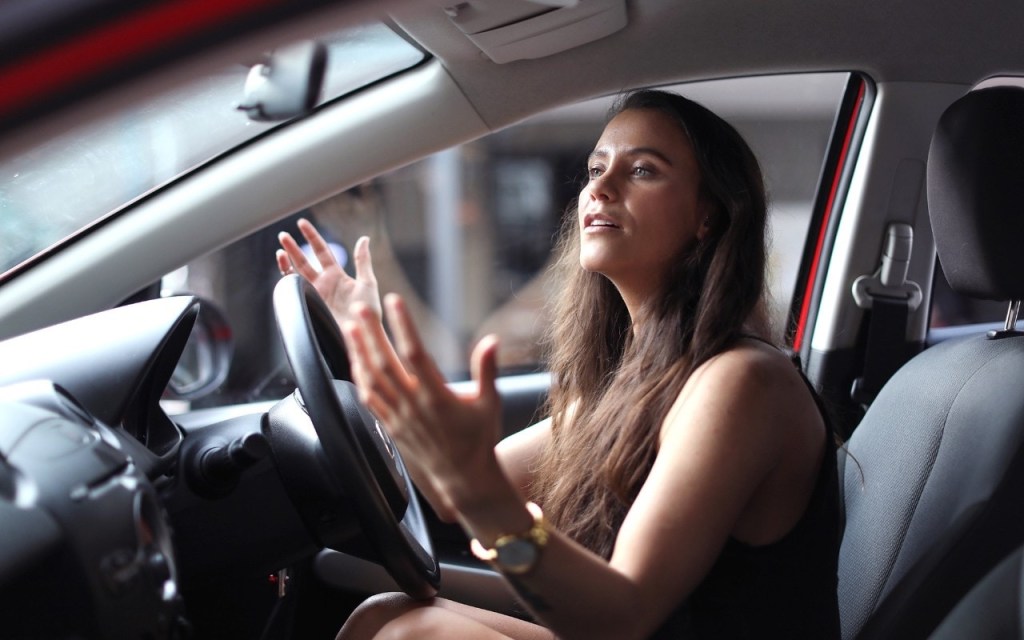
I visited the drive thru at KFC with the kids some months back. It was one of the first days it had opened after lockdown, so the queue was massive. Unfortunately, this created a bit of difficulty for the people trying to get in and out of the carpark. Or so I realised, when I found myself sandwiched between two cars, and a very grumpy looking lady started blaring her horn at me to move.

Instantly, I could feel the irritation rising up in me.

Can’t you see I can’t go anywhere?’ I mouthed.

I gestured rather self-righteously at a way for her to mount the kerb around me.

She wound down her window. Uh oh.

‘Love, I’m not going over the kerb and wrecking my wheels. You’re blocking my way. You need to reverse.’

Suitably under pressure, I tried to manoeuver my way out, but my reverse parking sensors started to blare. I raised my arms helplessly.

She smirked surreptitiously. ‘Look lady, I’m a lorry driver. I know what I’m doing, I’ll direct you out.’

And so, slowly, and painfully, I did a 50 point turn with the whole place watching.

By this stage, I was seething. But then she had the cheek to say, ‘Try not to block any other customers now, won’t you?’
The steam was coming out my ears by now. But just as the frustration bubbled over, Zoë piped up, ‘Wasn’t that so kind of that woman to take the time to help us out?’

Ouch.

It reminded me of the question that changed my life a few years back. The question that helped me to begin refusing to be ruled by my own exacting standards or expecting the same from others.

What would happen if I assumed the best?

What would happen if I gave this person the benefit of the doubt?

Or, put another way, what is the most generous assumption I can make about this person right now?

Let me tell you, I was not feeling generous towards that woman at KFC. But in her childlike simplicity, Zoë reminded me in that moment that I could at least be hypothetically generous.
So… what if this woman’s general manner just happened to be brusque, and she was actually being helpful?

Hmm, that was perhaps a bit of a stretch.

But what if she was late to an appointment already and my lack of basic observational skills (and spatial awareness) was stressing her out? Yes, that was more likely. Ok, I’d probably feel the same in that situation. So I just need to breathe and let it go.

You see the difference the question makes? In your head it transforms someone from being rude and ignorant to harassed and stressed. That may or may not be the case, but starting from the positive helps you deal with the situation in a much more constructive way.

Are you finding yourself scratching your head or frustrated by the way someone is acting?

You might not be feeling like giving them the benefit of the doubt, but you could start with a hypothetical question.
For example, if someone overtakes you on the motorway at what you consider to be a dangerous speed, your first reaction will often be, ‘How irresponsible!’ (That’s the clean version). I wonder would you feel differently about their behaviour if you discovered they had an injured person in the car or were rushing to hospital to visit a dying relative? You’d find yourself praying for them rather than glaring at them.

Or, if you need an employee to answer an urgent work matter and they aren’t picking up, instead of getting annoyed or frustrated you could think, ‘Well, to be generous I might assume that this person had a family emergency and therefore couldn’t respond to me when I needed them to. I wonder are they ok?’ Now you’re concerned instead of cross.

Or perhaps your friend continually cancels meet-ups last minute, and you assume they can’t be bothered. I wonder if you knew they’d been suffering from panic attacks for months, and hadn’t plucked up the courage to tell anyone yet? Instead of taking it personally, you’d be asking them what you could do to help, wouldn’t you?

See how simply asking the right question could change the whole dynamic of the situation, as well as your own mood, at least until you find out what’s really going on?

Maybe it’s time to stop evaluating people based on what we think they should accomplish, and start respecting them for who they are. As Brené Brown puts it, our lives immediately become better when we “work from the assumption that everyone is doing the best they can.” This assumption may not always be correct, but neither are the negative judgements we can make so quickly.

Everyone is fighting battles we know nothing about. If we can practice choosing kindness and generosity, we will become kinder and generous people all around. If we assume the best, we become better.

So the next time someone does something that makes your blood boil, try asking yourself that question, and see if it doesn’t help you cool down and chill out.

Over time, it might just change your life.

H xx
The hamster and the covid test 🐹

Ok, so this isn’t one of my proudest parenting moments. But I’m going to share it because no doubt most of us will have to go through this rigmarole at some point in the next few months, and as well as being mildly amusing (only in hindsight, I assure you), let this be a warning not to promise rewards in the moment you aren’t willing to deliver on; you may regret it.

A lot of you parents will already be familiar with the current dilemma – your child develops a cold, then starts coughing, so you need to get them tested before they can go back to school or attend doctor’s appointments.

This happened with Eden a few weeks back. I was desperate for her not to miss any more school, so the test got booked. The day started out well; we chatted lightheartedly about a little ‘tickle’ up the nose, then the plan was to do a McDonald’s smoothie as a treat afterwards.

Let me tell you, the half-hour drive to the test centre was the ‘smoothiest’ part of that day (couldn’t resist the pun, sorry 😂). We got there, they gave me the test kit, and I read the instructions in blissful ignorance. ‘Take your time,’ they assured me. ‘There’s no rush. If you need any help, just put your hazards on.’

‘Pfft, who needs help?’ I thought. ‘I’ve got this!’

The angry cat 😾

It was just myself and the girls in the car. ‘Ach, we’ll have a wee girls’ day out,’ I’d thought (uncharacteristically optimistically).

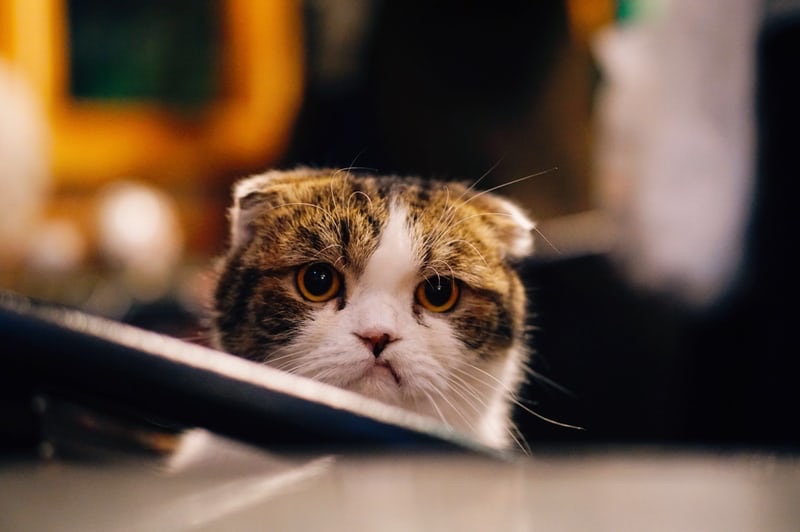
But my first mistake (of many) was not bringing Daddy with us, because as soon as Eden laid eyes on that cotton bud, she morphed from her usual cuddly kitten self into an angry tom cat in the front seat beside me. Back arched, reversing, growling, immediately she began swatting her little paws at me.

Oops, there goes the swab.

[Hazards on]

Red face.
New swab
New tactic.

The puddle protest 💦

‘Right Eden, here is a sweet, you may eat the sweet WHILE I put this stick up your nose, got it?’

Eden stuffed her sweet into her mouth, but as soon as I moved the cotton bud in her direction she melted into a puddle of tears and flopped herself down so far in her seat that the sweet strategy became logistically impossible.

The kind attendant saw the chaos, came over and tried to sweet talk her into it. All he got were frowns and grimaces. He suggested we come back another day. I assured him we’d get there eventually.

The wailing (brick) wall 😭

He suggested I let her watch a programme on my phone. That got the swab up for two seconds, but then pure chaos descended. Eden literally threw herself about the car, crying as hard as she knew how. By that stage, I was crying too. Zoë just kept saying, ‘my ears hurt, my ears hurt, my ears hurt,’ over and over. We had hit a (wailing) brick wall.

Desperation descended. All reason went out the window. Eden had flung herself into the back in an attempt to escape my clutches, so I had to clamber, (very awkwardly I’ll add, since I wasn’t allowed to exit the car), into the back seat, and plead with her:

‘Honey, we’ll go to McDonald’s and you can get a muffin if you’d like.’
‘Sweetheart, you can pick a toy in the shop.’
‘Pet, do you see the other GOOD children in the car park who aren’t making a f
uss?’
‘Look, there’s a unicorn in the sky!’


I tried pinning her down. She was too strong.
I tried telling her off. She was past it.

By now we had been there two hours. Yes, TWO hours.

The rash promise 😬

I was done.

‘Eden, what do you want most in the whole wide world?

‘A hamster.’

Will you put this up your nose if I give you a hamster?

‘Yes.’

Ten seconds and the test was done.

I beeped my horn and the man came over.

‘Wow,’ he said, ‘you are one persistent mummy. Most people would have given up long ago. Well done.’

I just smiled through the watery eyes. I’d been humiliated enough. He didn’t have to know about the hamster, really.

And it’s a good job I didn’t tell him.

Because I was about to get even more embarrassed. We’d been sitting there that long with the music on that my car battery had gone flat. So a whole team of COVID test centre employees had to push my car so I could jump start my way home.

What a day.

And now, I have to deliver on my promise. Soon a hamster will be joining our family.
Good job we’ve already got a name. If he’s a boy, he can be Covid. If she’s a girl, Corona works quite nicely.

What’s the moral of the story?

In the heat of the moment – no matter how bad it gets – never promise what you’re not willing to deliver on. Because it may just come back to bite you 😂

H xx

Kids making a mess?: Six reasons to let it go, for a while anyway

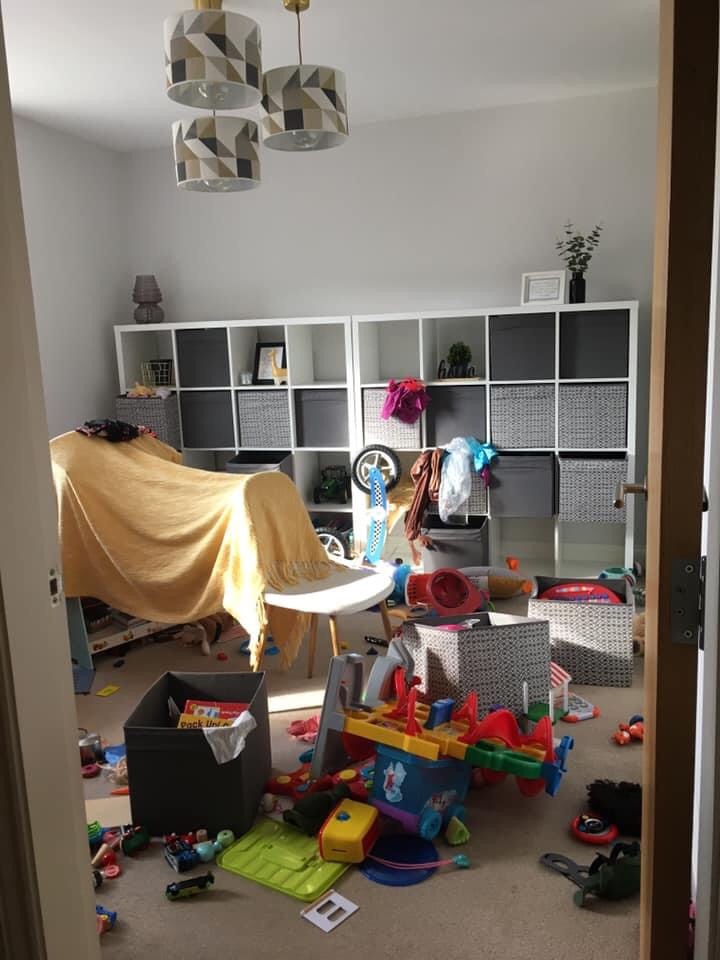
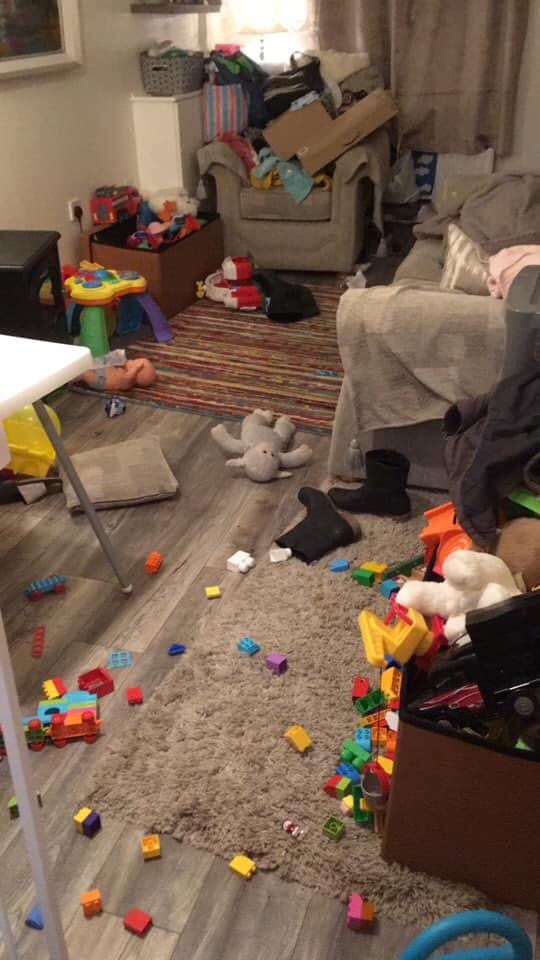
Most of us are able to look at the chaos in the kids’ bedrooms or playroom and laugh it off, roll our eyes, or even sigh and shut the door.

Most of the time, that is.

There are moments, though, when it all just gets too much. We step on a plastic pineapple or a stray piece of Lego and we snap. Out of nowhere, a stream of threats come thick and fast…

‘You better watch or the hoover will get your toys,’

Those things will be going into the roof space if they don’t get put away, fast!’

We’ve got a running joke with a friend – affectionately named ‘Auntie Beth’ – that she ‘will come around some day with her bin bag when you’re not there, and if she finds these toys on the floor, into her bin bag they’ll go!’

Shame on us, eh? Maybe none of you make those kinds of threats 😉 But if the mess is getting you down, here’s six reasons to not be too down in the dumps about it.

1. This is normal

Mess is totally normal. Let’s face it – what most people’s houses look like on Instagram is not what they look like from day to day. Especially those with young children.

There are those who thrive on tidy and are experts at it. But they are few and far between.

So if you find odd socks and toast mixed in with your duplo once in a while, it’s fine.

2. Mess may be in the genes

Yes, you can ‘train a child up in the way they should go,’ but I’m not entirely sure this totally applies to messiness. Bill nicknamed me ‘Cinders’ when we first met. My mum was very thorough in preparing me for life; we did lots of chores and tidied up regularly. But am I still messy? Yes, I am.

Actually, now most child psychologists agree that messiness is predominantly an innate personality trait. That’s why, from an early age, children will usually lean either towards lining up and organising their toys, or dumping them out on the floor.

What’s the lesson here? Do your best to train them, certainly, but don’t think you’re failing if they don’t always catch on.

3. You may be teaching independence

At one point in my early teens, my mum gave up nagging me to tidy and let my room become my responsibility. At that point, I got creative and enlisted help from my childhood bestie. Suddenly, tidying became lots more fun! We played games while sorting through all the stuff and letting my gerbils run wild in the midst of it.

Are you ready to give up on keeping on top of the clutter? Look on the bright side. At an appropriate age, allowing independence in this area can actually pay dividends.

4. Learning is messy sometimes

Maybe learning is actually a messy process. Some mums crack up when the toys are mixed up. But what if the Disney princesses wanted to go to the aquarium that day? Kids don’t play by manufacturers’ rules when they play. The world is their oyster. Let them play with more than one thing at a time, if their scenario requires it. After all, their play is their work, and their work is their learning.

5. You learn to function in mess

Ever heard the phrase, when a room is cluttered, your mind is cluttered? That is true, to an extent. Mess can negatively affect your mental well being, but only over a prolonged period of time. And maybe it’s partly because, especially in Northern Ireland – mess has such a stigma attached to it.

I remember the houses I loved going to the most as a kid. And I’ll be honest, they were the ones where mess was ok. Where your imaginative scenarios weren’t interrupted. Where you were given freedom.

A little untidiness from time to time can actually help you feel comfortable in a range of environments. Win win!

6. Mess isn’t wrong

This one is really important to remember. Order is nice. It makes us feel capable and in control. But sometimes disorder is beautiful too.

Like when the leaves fall from the trees and gather in a heap of fiery hues. Breathtakingly disordered.

If creation itself is messy, then it’s not a bad thing if our homes are from time to time.

Don’t mind the mess!

If kids are always pressured to put a toy away after they are finished, then maybe the play adventure ends before it’s supposed to.

Depending on my mood these days, I usually just leave the playroom now until just before bed, where the tidy up song is played.

Recently I’ve also put half of the toys in the roof space, and plan to do a switch in a month’s time. That’s why even the messiest it gets won’t be as messy as it could get.

Whatever your approach to mess, at the end of it all remember that one day you’ll miss that mess and the memories it created. Really, you will!

H xx

The struggle is real, but what will we let it bring out in us?

Watching the live news updates on BBC the last few nights, I’ve been struck by the disparity of the comments, coming one after the other.

Sharp criticisms.

Cutting sarcasm.

Venomous words.

Coarse humour.

I’ve felt the force of the frustration and the upset of the unknown.

I’ve felt pity for the leaders speaking; human beings who are trying to do their best at an impossible balancing act, but who have become the targets of collective anger.

I’m feeling for the people who are feeling the loss of livelihoods. I feel the fear of business owners who don’t know if they will survive this time round.

I am devastated for special needs families who have gone so long now without vital support. They must be on their knees with weariness.

I feel the disappointment of those who have weddings coming up and for whom everything is up in the air. Should they postpone or forgo their once-in-a-lifetime dreams? It feels like an impossible decision to me.

I feel afraid for domestic abuse sufferers who are indefinitely confined to their private nightmares. Where can they escape to now?

I am gutted for grievers who are not feeling the physical presence of those mourning with them. How can they cope without someone to hold them close?

I am disappointed for our kids who have just got into a routine of education only for it to be unsettled again.

The struggle is real. The challenges are closer than ever, for so many.

And yet, I find myself dreaming… longing and praying, with:

Hope that we will stop allowing ourselves to be so divided by our opinions

All of us can so easily fall into the trap of callously labelling and categorising people. This is not a case of the ‘faith-filled versus the fearful.’ Or the ‘reckless versus the ‘responsible.’ Or the ‘selfless versus the selfish.’ All of us have good days, and bad. Days where we make wise choices, others where we make the wrong ones. Days when we are fearful, and days when we are brave.

So often we are so consumed by what separates us that we forget what we all share. We all have in common the human condition of being finite and prone to weakness and frailty. If we acknowledge our shared finitude, we can be united in it and strengthened by the fact that, we are not alone. No one else gets it right all the time, either.

Hope that we will stop pointing the finger of judgment

Oh we are so good at judgment. Suspicious glances at the person behind us in the shop who is coughing. Shaking our heads in disapproval when we see guidelines aren’t being followed. Glaring at young people who aren’t ‘social distancing.’

We aren’t so good at self examination though. Whatever happened to the plank/s in my own eye? Please God, open my eyes to see what I need to fix in my own life before I become so focused on fixing other people’s behaviour.

Hope that we will see through the lens of compassion

I’ve loved some of the crowd funding initiatives I’ve seen on Facebook recently. Fundraising for operations. Dieting for charity. Climbing mountains for a good cause. Donating clothes for people in need. It’s amazing to see the compassion rise up in people as they understand and respond to genuine need.

And let me suggest that what we all need right now is a good dose of compassion.

Because when we look at one another with compassion, people cease to be an inconvenience, or a hindrance, or an irritation, or an enemy. They are just people. People with good points, great points, poor points and ugly points. People with a story. People who need grace, just like you and me.

What will this (very real) struggle bring out in you and me?

Yes, this time is super hard for everyone, for different reasons, and in very different ways. Crises have a potent power to divide. To intensify the judgmental tendencies within us. But challenges also have the potential to bring out compassion in us.

There’s a very special kind of plant that blooms in the aftermath of forest fires. It’s called the fire poppy. For fire poppy seeds, intense heat is their very signal to sprout.

What if, when we are under stress and duress, what bloomed in our life was compassion first, always, every time?

We are all human

We are all finding this hard

Let’s not label or point the finger

Let’s let this furnace bring out a blaze of compassion in us rather than a flame of judgment.

The struggle is real, but what will we let it bring out in us?

H xx

An operation in resilience #2

Today my wee Zoë is having follow-up surgery on her arm. She smashed the bone just under her elbow in June and had plates and screws installed. I wrote a post during her first operation – I’ll admit, it was partly to distract myself from pacing the corridors and going out of my mind.

This time around, she’s getting the metal work out. And just like last time, we’ve been pushed down the theatre list because higher priority cases came up.

Just like last time, Zoë has spent all day without eating or drinking.

But this time, I am able to be with her. And now, as she’s being operated on and I’m sitting on my own in the ward, I’ve found myself thinking, ‘what have I learned from the last time?’

Back in June, as she was being operated on and I was crying my eyes out in the carpark, I realised that resilience has very little to do with how you feel, but everything to do with how you respond.

This time round, I feel just as tense, just as helpless, and just as emotional. And yet I’m more at peace that this is simply a natural way to feel as a parent. How I choose to respond is much more important than my emotions. So this is what I’ve tried to do this time around.

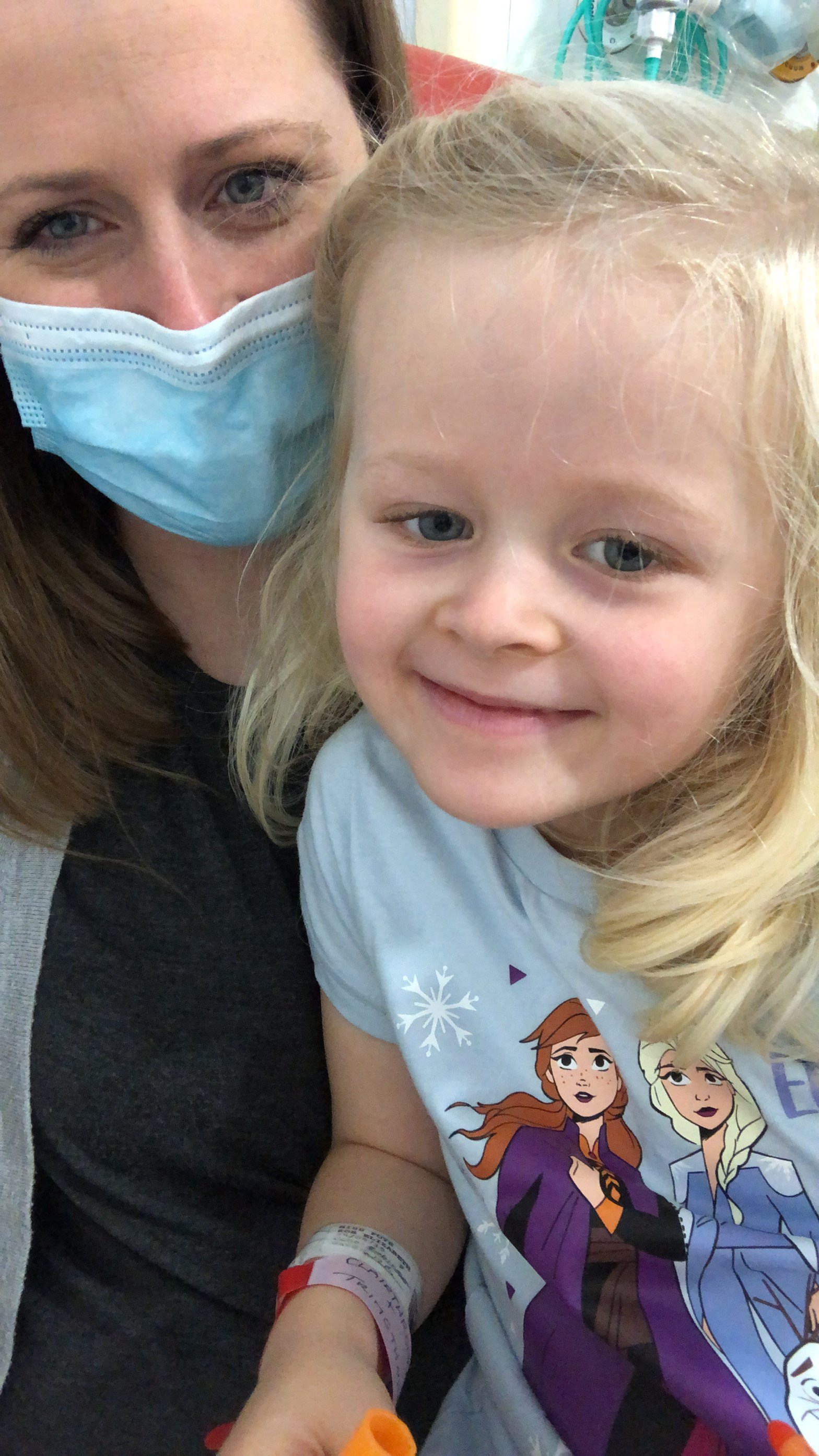
Hospital selfie

1. Go with the flow

If there’s one thing the last few months of this pandemic have taught us, it’s that things change all the time; often unpredictably, and not in the direction we’d like.

What in the world can we do? The only thing we can do. Go with the flow.

Back in June, I became so frustrated that the timescales kept shifting and the plans kept changing. But this time, I chose to let reality be reality, accept it and look at the big picture. We are not the only priority for the medics caring for us, and they are doing it beautifully. So we just make the best of it; and that’s what we’ve been doing today:

⁃ Playing tic tac toe

⁃ Practicing writing our letters

⁃ Colouring in countless mermaids

⁃ Working through an activity book

⁃ Enjoying some crafts

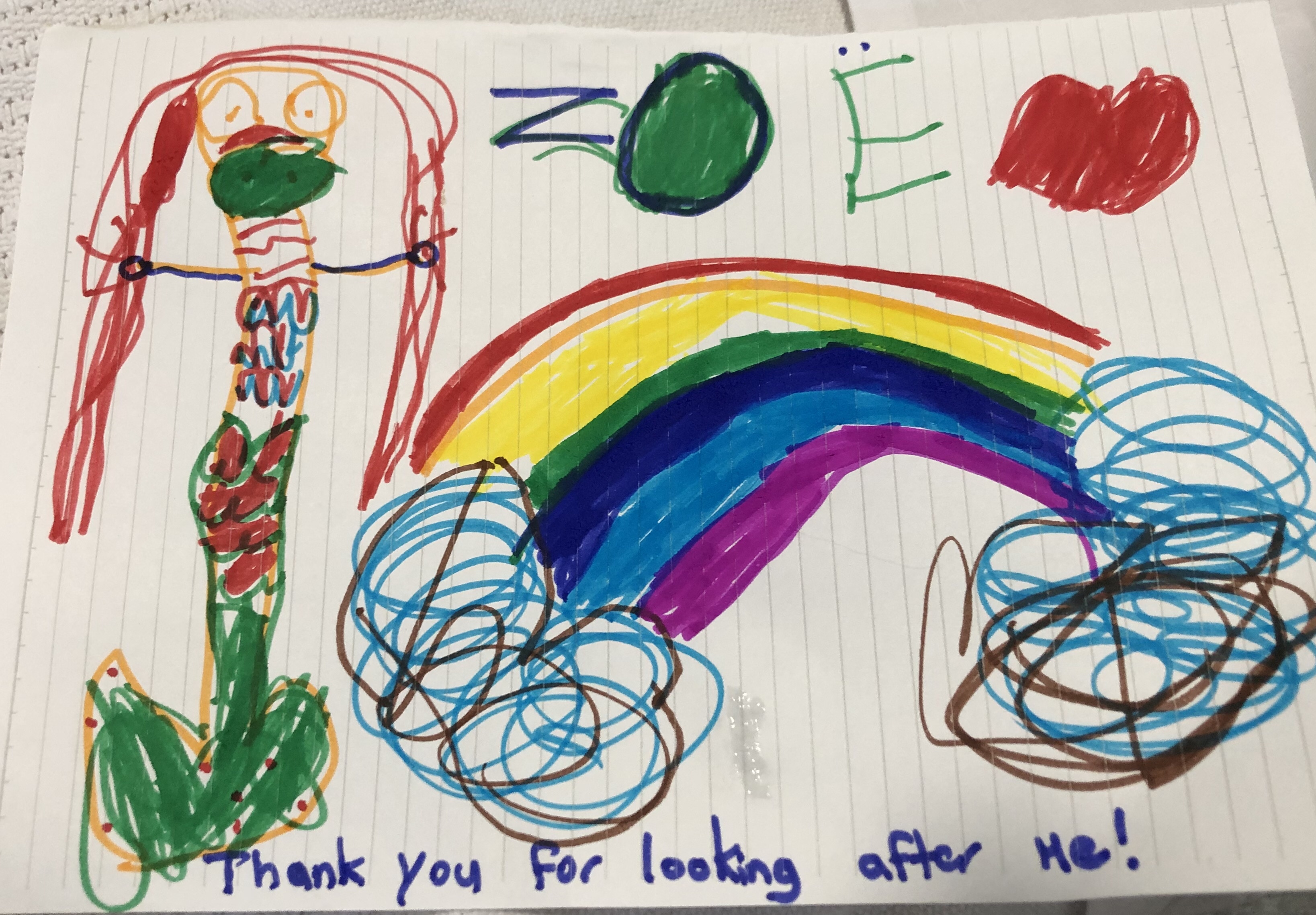
⁃ Drawing pictures for the nurses

⁃ Playing memory games

⁃ Practising some rhyming flash cards

⁃ Modelling putty

⁃ Listening to music

⁃ Watching programmes

Each time Zoë asked, ‘When am I going for my operation?’ I responded as brightly as I could, ‘Hopefully soon!’ – and changed activity.

When things keep shifting, go with the flow.

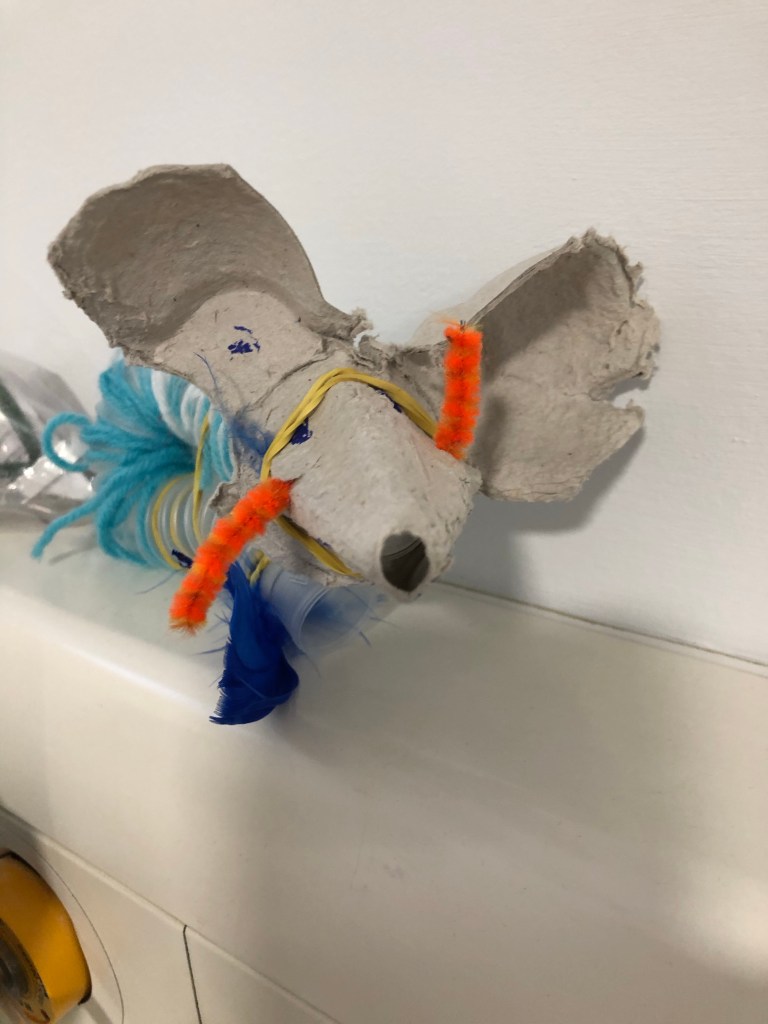
Mouse craft 🐭

2. Look for the gold

Let’s not forget that the purest gold is forged in furnace temperatures. When we are feeling the heat in life, the opportunity is presented for golden qualities to rise to the surface.

Now that’s she’s in theatre, I’ve realised that what has made me so happy inside today is how Zoë seemed completely unperturbed by the situation she found herself in. She smiled and made polite conversation with everyone, and was just a ‘delight,’ according to the anaesthetist’s assessment.

I’m realising again just how proud I am of my daughter and the joy and fun she brings to others’ worlds. I’ve also admired her maturity today about not being able to eat, as well as having to wait so long.

I’m sure many parents whose children are in hospital regularly find themselves feeling this immense pride over and over again- delight at the strength and beautiful characteristics that come out of them in those moments. It doesn’t mean they don’t have their sad, emotional, and even angry moments. But it does mean that the gold shines through them – even, and sometimes especially- in hard times.

In challenging times, look for the gold shining through in the people around you.

3. Take time to dance

As the op was put back yet another hour today, wee Zoë started to flag. By now, she was super tired, and ravenously hungry.

Then I had a eureka moment.

It was time to dance.

I put on ‘The Nutcracker’ and her eyes lit up. She did a beautifully wholehearted (if slightly staggery) performance, and then (somewhat out of character), I jumped up and joined her of my own volition.

It was a good job the door of our side room was closed, because me doing ballet is not the most graceful sight to behold. Between the two of us there were more clumpy feet and disjointed timings than there were pointed toes and synchronisation. But as we swayed and she giggled, I thanked God once more for the beautiful relationship we have.

There’s days when we just gotta take time to dance (no matter how bad we are at it.) In fact, the hard days are the best days for it. For a split second, I forgot that we were in a hospital ward, and it was just me and my girl, painting our own beautiful moment in time.

I’ve just heard the wee pet is in recovery. And at the same time as remembering what it’s like to breathe deeply again… Here’s what I’m going to try to remember next time I’m in a situation anything like this:

…Go with the flow

…Look for the gold, and

…Take time to dance!

Are you facing a situation at the moment that you could affectionately name an ‘operation in resilience’? Have you been here before? If so, what lessons can you apply to right now?

H x

Brave girl post op

On the days you just want to go back to bed…

Anyone else in the same boat?

One morning a few months ago (and there have been many since!), I pulled the covers over my head and said ‘No thank you’ to the new day. Yes, you heard me, this imperfect pastor’s wife does not always wake up warbling, ‘This is the day that the Lord has made,’ and neither do I always ‘rejoice and be glad in it.’

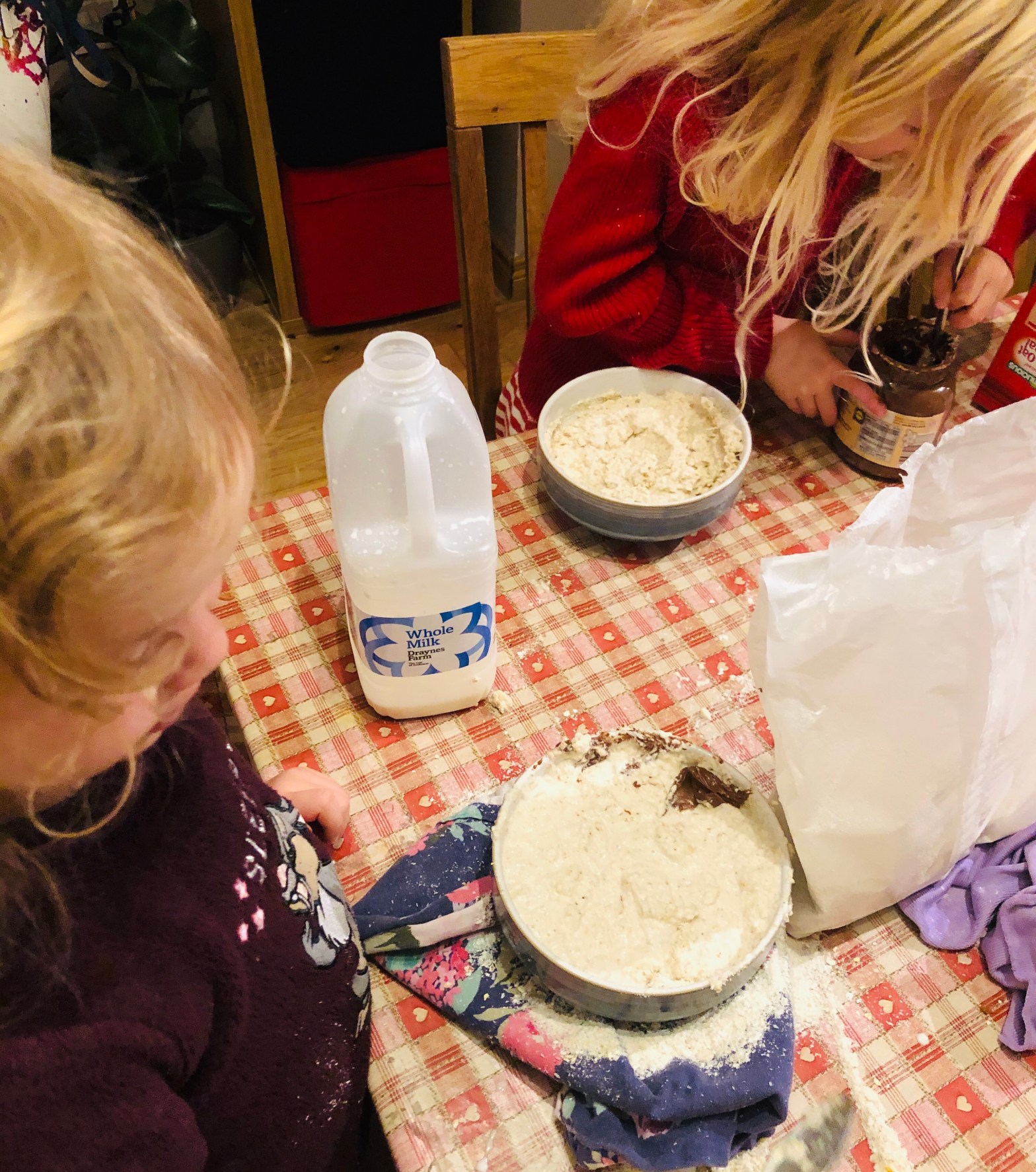
That day, my kids got the bleary-eyed, grumpy, uppity and woozy me- so much so, in fact, that they gave up trying to badger me out of bed, went downstairs on their own and made themselves chocolate porridge. I admired their independence, I have to say…

My kids keep finding reasons to get up early. I don’t really understand it, but they seem to waken earlier in winter, when it’s still dark and the street lamps are still lit. And especially the days when it’s pouring with rain!

The day before, it was 5 am because the tooth fairy had left a pound coin under the pillow.

That day, it was someone stealing someone else’s bed.

Tomorrow, it’ll be one child poking another awake and asking about dreams from the night before.

So, how do you make those groggy winter mornings a little more bearable? Here’s what we’ve tried these last few months. And believe me, we’ve needed all the pick-me-ups we could get!

1. Start the day with positive words

When your child, husband, or animal puts their freezing cold hands/paws on your face and wakes you up with a jolt, it’s a good idea not to say what you’re tempted to in that moment…

A better alternative might be, ‘Good morning- I love you! We are going to have a great day.’ See if it doesn’t make you feel a bit different! (I’ll have to try that one tomorrow 😊).

But if you need to follow that statement with, ‘But it’s still the middle of the night, so I’ll see you when it’s actually morning,’ that is more than acceptable.

2. Put on some music or an audio book

It’s amazing what listening to songs or stories can do for your mood and motivation. If you’re a parent, a happy tune or a sunny kids’ story often does the trick. Zoë can be really bouncy in the morning, but if you give her something to listen to, she’ll be more likely to concentrate on colouring in or doing something a bit calmer than talking non-stop or launching herself off the furniture.

Time for a coffee, I think!

3. Have a shower and get dressed

This one might seem obvious, but when you’re at home all day, it’s very tempting to stay in your pjs. My advice (from a wealth of experience) 😂 is, don’t! It’s remarkable how much better a shower and a fresh outfit can make you feel.

4. Lay out your clothes the night before

The days I am running around like a mad person looking for a missing school sock are not the most harmonious. I’ve started putting all our clothes out on the sofa just before I put the kids to bed. If you know everything is laid out and ready, you’ll immediately be more relaxed when you first open your eyes. In Instagram lingo, it might actually even make you feel more like the organised mom and less like scary mommy.

5. Don’t hit the snooze button

“Hitting the snooze button in the morning doesn’t even make sense. It’s like saying, “I hate getting up in the morning so I do it over and over and over again.” (Dimitri Martin, Comedian)

So many of us do this all the time, don’t we? But what’s the point! I’ve come to terms with the futility of this exercise. We are awake, so we might as well just be awake! Let’s not prolong the pain!

6. Set your heating to come on for wake-up time

This, my friend, is a very simple thing. But it can be a game changer. I remember growing up we lived in a big cold house in East Belfast. If you were freezing, you just put on a jumper. I still remember how cold the floor felt in the middle of winter. 🥶

Bill, on the other hand, grew up in a small, scorching house. He wore shorts in the middle of winter. Now, two having become one, we try to find a happy medium. The heating on in the morning but not much during the day we find to be a balanced approach, and makes crisp mornings much cosier all round.

How do you make cold winter mornings more bearable?

H x

“Morning is wonderful. Its only drawback is that it comes at such an inconvenient time of day.”

Glen Cook, Sweet Silver Blues

Screen fatigue and digital addiction: a family experiment

We’re all tired of screens, but we’re all also addicted to them. It’s making us sick. And tired, too. Here’s three tips for beating the digital blues.

‘Screen fatigue’ is a phrase we are hearing a lot these days. Employees are complaining of being exhausted after long online meetings. Some are loving online church, others struggle to stick with it. Meeting virtually keeps us connected, but we miss real people interactions. We enjoy seeing people’s faces, but we’re uncomfortable seeing our own staring back at us.

Some parents are stuck home with the kids isolating and are running out of other things to do. People whose income depends on online interaction find themselves sucked in 24 hours a day and longing for a break. And so the pendulum between screen fatigue and screen addiction swings back and forth until we are dizzy from it all.

The thing is, smart devices are useful. Too useful. They have calendars, internet banking, games, Amazon, Google, Zoom, social media platforms, Bible study apps – everything you need in your hand. For most people, they’re just too useful to set down altogether.

But it’s not just their usefulness that pulls us to constantly check our phones. It’s obligation. Work communications. Relational connections. Every time the phone buzzes, many of us feel like we have to reply right away. (If you don’t think that’s you, try not reaching for your phone when it buzzes. You may feel more uncomfortable than you thought you would!)

We all want to reduce how much tv we watch and the time we spend on social media. Yet as if it wasn’t challenging enough in ‘normal life’ to cut back on screen time, our ability to regulate our screen usage in the ‘new normal’ has become even further out of reach when we are required to work remotely, socialise online, and interact on school apps and Facebook pages.

Chatting to people, I’ve found that over lockdown they’ve often gone one way or the other; they’ve either put the phones away altogether because they found online stuff too draining- or else they’ve become more and more drawn in to the online world.

But what about the side effects of screen time?

I’ll be really honest here… the following is not an unfamiliar scenario in my house:

The stillness of the morning is broken by the shrill whine of child number 1 or 2, ‘I wanna watch something.’

The neighbours are then treated to a cacophonous crescendo of disagreement about what to watch:

‘Dora’

‘Elsa and Anna’

‘DORA!’

‘Elsa and Annnnnaaa’

DORRAAAA!!

[Resounding wails.]

Mum groans while dad runs to intervene. Or vice versa.

Great start to the day, huh? Please tell me I’m not the only one??

I wonder, if we really considered the potential costs of too much screen usage for all of us, would this cause us to take more drastic action? Here’s what I notice in myself when I’m on my phone too much:

🤔 Lack of interest or concentration for other activities.

😴 Poor sleep quality

😬 Increased irritability

🤯 Increased anxiety levels

I’ll admit that I haven’t always been convinced screens make a huge difference to these things. But a while back I decided enough was enough when I started to look forward a little TOO much to those moments when some digital character was entertaining my kids, so I could sit in a quiet room with a coffee and a chocolate bar.

So we turned it all OFF. For a week. And let me tell you how enlightening this simple experiment was for us.

Day one. I braced myself for strong feelings and bad moods. In the morning, I explained that for all of us to have a wee break from screens, we wouldn’t be watching tv for a week. There was very little reaction. I planned a busy day; going to the park in the morning, meeting a friend in the afternoon.

Day two. I notice that our pace in the house had slowed down. I was actually getting chores done with the kids in tow. They were ‘helping’ unload the dishwasher and brushing the floor along with me.

Day three. My kids were covering boxes with their creative art, making all kinds of creations out of play dough. They were fighting 10x less a day, and were much more contented and well-mannered.

And I felt more relaxed too. I was letting my phone battery run out and stay off. I wasn’t repeatedly checking facebook or looking for the next of those addictive little red dots. I felt much more present, and I felt like they were too. It actually made me consider whether to ever go back to where we were.

But now, after six months in lockdown, some days we are there again. Agitated, distracted and not sleeping as well.

So here’s my plan for the month of October, along with some ideas that might be useful for you:

Reduce

Limiting the amount of time you spend on devices in lots of little ways can add up to a lot of time!

📞 Take the Facebook app off your phone

⏰ Limit checking social media to x3 a day (after breakfast, after lunch, after dinner)

✅ Cut off the WiFi at 11 p.m. every night (for those of you with older kids, you can an download an app that allows you to shut off your kids’ phones remotely.)

🛌 Don’t use phone an hour before bed

🥰 Give yourself a reward for each of these goals you achieve!

Replace

Replace screen time with something good for your body, mind and soul!

📖 Read a chapter of a novel each night before bed

📅 Set a reminder for your daily devotions

🖊 Do a ‘brain dump’; write down your prayers, thoughts, feelings and worries at some point in the day.

🦆 Do something fun in nature; feed the ducks, splash in puddles, collect conkers or go for an evening power walk.

💄 Slot in a little pamper activity each day; even if it’s a five minute face mask, nail file and paint, craft activity or game of football – whatever helps you relax!

Refresh

Here’s the final, more radical step, that we need to be more disciplined about, but which is totally key to feel refreshed and rejuvenated.

For one day a week – for 12 hours at least, try to unplug everything electronic.

📺’Screen free Sundays’ are a habit some families are getting into.

🎨 Paint, do puzzles, play board games, play music, or bake together. Quality, focused time with family is a beautiful thing.

So how can we begin to beat the screen fatigue and addiction pendulum swing?

👍 Reduce the time spent on screen using a combination of habits.

👍 Replace what you do on your device with other fun things.

👍 Refresh from the digital by withdrawing from it for a day a week.

Next time you see or talk to me, please ask me how I’m doing with this! And If you’ve got some good tips on how you do screens in your house, I’d love to hear from you!

H x

How to get through a pandemic: Just do the next right thing

‘Just do the next right thing

Take a step, step again

It is all that I can do,

to do the next right thing’

Anna, Frozen

This pandemic has had a way of making us take things day by day, hour by hour, even moment by moment. With the restrictions changing all the time, it’s become so difficult to plan – or even think about – things too far ahead.

I don’t know how you’ve found it, but that aspect has been pretty tough for me personally; I like having things to look forward to! Having kids forced me to become more spontaneous and flexible in general, but the last few months have felt like a step too far. Now, the disappointment of Christmas turning out differently and the prospect of being cooped up at home for yet another six weeks quite frankly fills me with dread.

But there’s one particular piece of advice that is resonating with me as much today as it did at the start of this year and is still keeping me going, for now at least.

Do the next right thing.

1.DO the

2.NEXT

3.RIGHT thing

Whether we are talking about facing a big challenge like navigating another day of grief, or contemplating a small gesture like mowing our neighbour’s lawn, every moment presents us with a new opportunity to make a good, healthy, just, loving, kind, impactful – right choice.

Just DO the next right thing

Yes, no matter what’s outside our control, we always have the power to do something positive. In Theodore Roosevelt’s words, ‘the best thing you can do is the right thing… but the worst thing you can do is nothing.’ And the worst thing for all of us right now is to allow ourselves to become paralysed by uncertainty.

You don’t have to handle the rest of this year, or sort out the rest of your future, all at once. You’re not required to have the day figured out, the week planned out, or every problem solved and settled. But no matter how long the days or how dark the nights, as long as you and I can see the next small thing in front of us to do, and act on it, then dawn will come eventually. One step at a time.

There will be many things we can’t do over the next while. But when there’s restrictions on what we can’t do, we can start by doing what we still can.

Reading more with the kids 📚

Journalling or writing a blog 😁

Doing DIY jobs that we’d been putting off 🔨

Baking for our neighbours 🍰

Writing and recording songs 🎶

Writing to elderly relatives and friends 🖊

Doing online courses or learning a new skill 🏫

Enjoying take-away treats in the open air ☕️

There may be lots we can’t do, but there’s still loads we can do. In the words of Nike, ‘just do it!’

Just do the NEXT right thing

How many hours do we waste worrying about what is ahead? Don’t get ahead of yourself. You have today! You can’t change the past, and you can’t control the future. But life is available in the present moment.

I had this term all neatly planned out. The kids would be at school every morning, I would work while they were at school, and I would be free to do other things in the evenings. Let me tell you, I hadn’t planned for COVID.

But then again, no one did. Between sickness, isolating, and half time schedules, there has not been one week where my utopian vision has been realised.

I have felt a bit frustrated about this, if I’m honest, but I know there are others facing much bigger challenges, and I need to make the positive choice to be present, enjoy the extra cuddles and quality time with the kids during the day, work as and when I can, and make the decision to be flexible.

‘The foreseeable future’ isn’t very far right now. Let’s stick to the now, and the next right thing that’s in front of us to do.

Just do the next RIGHT thing

Someone once said that if you do the next right thing, the next right thing will happen. It doesn’t mean that the consequences of doing what’s right will be easy, but it does mean that we can be confident we are living a life that’s true to the values we hold. The way we make decisions is just as important as the decisions we make. I want to live a life led by values rather than circumstances. But sometimes doing the right thing can feel pretty hard.

A value of humility prompts us to say “I’m sorry” to someone we’ve hurt. 💔 It might not feel good at the time, but it’s for our good.

A value of good stewardship motivates us to be generous to someone in need. 💵 It might mean sacrificing something we wanted to buy ourselves, which might not feel good at the time, but it’s for others’ good.

A value of selflessness allows you to let your partner take a nap while you watch the kids. 💤 If you’re tired too, it might not feel good at the time, but it’s for the good of your relationship.

How we respond to the ever changing regulations needs to be guided by values, not wants. Our behaviour needs to be motivated by the good, not what feels good to us. How can we best protect? How can we best love? How can we best serve?

By doing the next thing that is right.

So the next time all this uncertainty threatens to overwhelm you,

… Start by doing something, when you feel you can do nothing

… Do what’s in front of you, rather than worrying about what’s ahead of you

… Do the right thing, and the next right thing will happen.

H xx
When your best is not enough

‘Do your best’ is a phrase we hear all the time. We tell our kids to ‘do their best’ and the rest will take care of itself. But what does doing our best mean? And what should the outcome of our best be?

I say this because sometimes without realising it we can unconsciously misinterpret the meaning of ‘do YOUR best’ for ‘do THE best at all costs.’

⭐️ For example, I used to think doing my best meant bending myself both directions until I nearly broke with exhaustion.

⭐️ I used to think doing my best was staying up into the early hours, trying to meet commitments I never should have taken on in the first place.

⭐️ I used to think doing my best was re-reading an email twenty times to make sure there was no mistake in it.

⭐️ I used to think doing my best was forgoing dinner so I could make a planned commitment right on time.

⭐️ I used to think doing my best was meeting the expectations of everyone around me.

⭐️ I used to think doing my best was never missing a note in a performance.

How wrong I was.

You see, doing your best is important, but so is recognising that not only will your best not always be the best – sometimes your best will not be enough.

Yes, sometimes you will invest 110%, only to find it still isn’t enough for those around you.

⭐️ Sometimes your best won’t be enough to get you that dream job.

⭐️ If you’re a boss, your best won’t always be enough to please your employees.

⭐️ If you’re a parent, your best won’t be enough to meet all your children’s needs all of the time.

⭐️ If you’re a friend, your best won’t always be enough to never disappoint.

⭐️ Sometimes the pressure of your circumstances will mean that temporarily you won’t be your best self.

And that’s ok. Really.

Because that’s where grace has the opportunity to abound.

Grace is unmerited favour. Grace is undeserved acceptance. When you experience true grace and learn to give it out, it is life-changing.

Here’s five ways grace kicks in when our best is not enough.

1. Grace accepts my limitations

We are limited beings with limited resources, capacities and abilities. For example, I am just not naturally sporty; even if I gave a 100m sprint my best shot, I’d still probably come in last. I’m also not naturally tidy; I could improve my organisation and do my best to keep on top of clutter, but my house still won’t look like the Joneses down the road.

I’ve also only got so many hours in the day. On the days when it’s my mum’s birthday, I’ve got a report to work on, my kids are off school sick and a friend has an unexpected crisis – I may forget to brush my hair, or fail to make dinner from scratch. And that’s perfectly fine, when grace is present. Because grace knows and accepts our limitations – whatever they may be.

2. Grace is realistic

And that’s because grace is unapologetically realistic. How many times have we expected far too much from ourselves or from friends or family members? But when grace fills our hearts and minds, we are able to accept the frailty of our humanness, and understand that we can’t be all things to all people, all of the time. Experiencing grace allows us to be more sensible about what we can actually achieve, and releases us to put less pressure on others to fulfil unfair expectations.

3. Grace celebrates progress

Grace is not only realistic, it helps us to celebrate when we do achieve something. Even if we have accomplished something seemingly insignificant – like getting to the bottom of the laundry basket or exercising every day in a week – when we have tried hard we should take time to acknowledge that. And even if we fail at something, when we have learned important lessons in the process, then we still have something to be joyful about!

4. Grace extends kindness

Grace assures us that doing our best does not mean sacrificing our mental health or stretching our physical limits out like chewing gum. When we learn to be generous to ourselves even when we get it wrong, how much more will we be equipped to extend kindness to others! We won’t expect our employees to work 60 hour weeks, or our friends to drop everything to speak to us. We can extend kindness, whether it is deserved or not. Do you want to be that type of person? I know I do; giving and receiving grace is the key.

5. Grace sees the heart

Lastly, embracing grace is a journey towards understanding that we are not the sum of your achievements; motivation and effort are much more important. It’s better to do something with a genuine heart and not get it totally right than produce something polished with a terrible attitude.

Your best will not always be enough, so embrace grace

Are you feeling like you aren’t enough today? That’s probably because none of us are, not without grace anyway.

There are some standards we will never meet. Think about it; when the best we could offer wasn’t even close to good enough for God, he gave His best instead – His perfect Son – so He could extend His unmerited favour to us. That is grace.

So next time you’re tempted to be hard on yourself or someone else who isn’t meeting your standards or expectations, remember,

Grace is realistic. Be aware of your (and others’) limitations, and accept them!

Grace celebrates progress. Don’t look for perfection, or you’ll always be disappointed. Look to learn instead.

Grace extends kindness. Look for ways you can merciful to yourself, and extend favour to others today.

Grace sees the heart. Attitude is more important than ability. Always evaluate motives above performance.

Sometimes your best won’t be enough.

And that’s where grace comes in.

H x
‘Winter is coming’: five ways to keep your family happier and healthier

Before I became a mum, the phrase, ‘winter is coming,’ conjured up cosy evenings by the fire, brisk walks in the fresh air, and sipping hot chocolate with marshmallows in coffee shops while watching passersby through steamed up windows.

Now, on first hearing, the phrase evokes something else altogether… that dread of hearing feverish moans in the middle of the night as children wake up with temperatures; the continual rescheduled plans; cabin fever and perpetual runny noses.

Covid realities have added another level to this sense of uneasy anticipation. Here we are, only two weeks into term, and both my kids are off school already! But before I can feel too sorry for myself, I want to make sure I write down what I can do – what all of us can do – to stay healthier and happier in this season! We all know the benefits of a balanced diet and exercise, but is there anything else that makes a real difference? Here’s five things that will give you and your family an extra boost:

Fresh air ❄️

There’s no such thing as bad weather, only poor clothing’

If you’re anything like me, when the weather is cold the last thing we can feel like doing is going outside. But once we make the effort, it’s more than worth it for the benefits.

My beautiful and wise Finnish friend taught me this. She is always prepared for all weathers with impressive all-in-one suits that keep out the wet and the cold, and keep little ones warm as toast. Check out the Reima range at www.reima.com – these are expensive but long-lasting; if you buy them oversized they’ll last for years and can be handed down from child to child as they grow.

Not only does being exposed to the cold increase your metabolism, being active outside causes your brain to release more of the hormones that make you happy (epinephrine, adrenaline and norepinephrine.) So get out there and get some fresh air!

Vitamins 💊

When my kids were constantly getting infections a couple of years back, I did a LOT of research on vitamins. The best ones I’ve found for kids are from the Nature’s Plus Animal Parade range – you can get them on amazon and in some local health shops. These are amazing! Not only do they contain the key vitamins and minerals but they taste great too, and the GOLD ones also include probiotics for improved gut health. Since my kids started taking these ive noticed a huge difference! They still get the occasional bug like the rest of us, but they fight it off much faster than they used to.

For the adults among us; if you can take vitamin C, vitamin D and Zinc supplements consistently, you’ll be giving your immune system a huge boost. They need to be good quality though. Most gummy vitamins contain more bad stuff than good- watch out for additives and artificial sweeteners!

Essential oils 🧴

Essential oils do not work miracles, but when used properly and safely they can give your mood and immune system a much-needed boost. Used as cleaning products, they reduce the amount of harmful chemicals coming into your home. They can also help with mood, sleep, ailments, aches and pains.

A kind friend recently made me a wellness roller blend from thieves, lemon and frankincense oil. It smells gorgeous on your wrists and is mild enough for the kids; we put it on the soles of their feet at night (with socks on!) Talk about a pick me up!

Here’s some benefits of the oils we love in our house!

Thieves: the individual components of thieves oil have been shown to have antimicrobial properties, promote respiratory health and wound healing, and may provide pain relief.

Clove: antimicrobial, tooth and muscle pain reliever, improves respiratory conditions like cough and asthma.

Frankincense: anti-inflammatory, improves gut function, relieves asthma and improves oral health.

Lemon: Reduces anxiety, improves cold symptoms, improves energy, antibacterial and anti-fungal.

Good quality sleep 💤

I’ve yet to put this one fully into practice! Most of us need 7-8 hours of good quality sleep to stay healthy. This is super hard to achieve if you work shifts or you have young kids. But if you can get to bed earlier, and avoid screens two hours before bed you’ll feel so much better when your alarm goes every morning. Alternatively, why not try these great glasses from sleepspec? If you want to go on social media or work late at night, wearing these can cancel out the harmful effects of blue light on your sleep.

If little people wake you during the night or you have health conditions that keep you awake, what can really help you get the best from the little sleep you’re getting is taking magnesium supplements. I started doing this a few weeks ago and have noticed a huge difference in the quality of sleep I’m getting.

Making memories 📷

Lastly, let’s not forget that the colder months bring lots of opportunities to make amazing memories. As a friend put it,

‘When I think of winter, I think of earlier bedtimes for the kids as it gets dark earlier, reading by the fire before bed always feels special, more routine, welcome breaks at Halloween and Christmas with all the fun and extra time together those bring, being cuddled on the sofa under blankets more often, cosy lighting and smells. Everything feels a bit magic in winter.’

Isn’t this so true? We’ve all got harvest, fireworks and lanterns, cosy evenings, snowmen, stockings and gifts to look forward to! Why not plan in some new family traditions for the harvest and Christmas seasons? Twinkl has some great ideas for creative new winter activities.

So let’s all stay healthier and happier this winter by:

1. Getting more fresh air ❄️

2. Taking our vitamins 💊

3. Trying out essential oils 🧴

4. Getting better sleep 💤

5. Making new memories 📷

How do you and your family stay healthy and happy?

H x